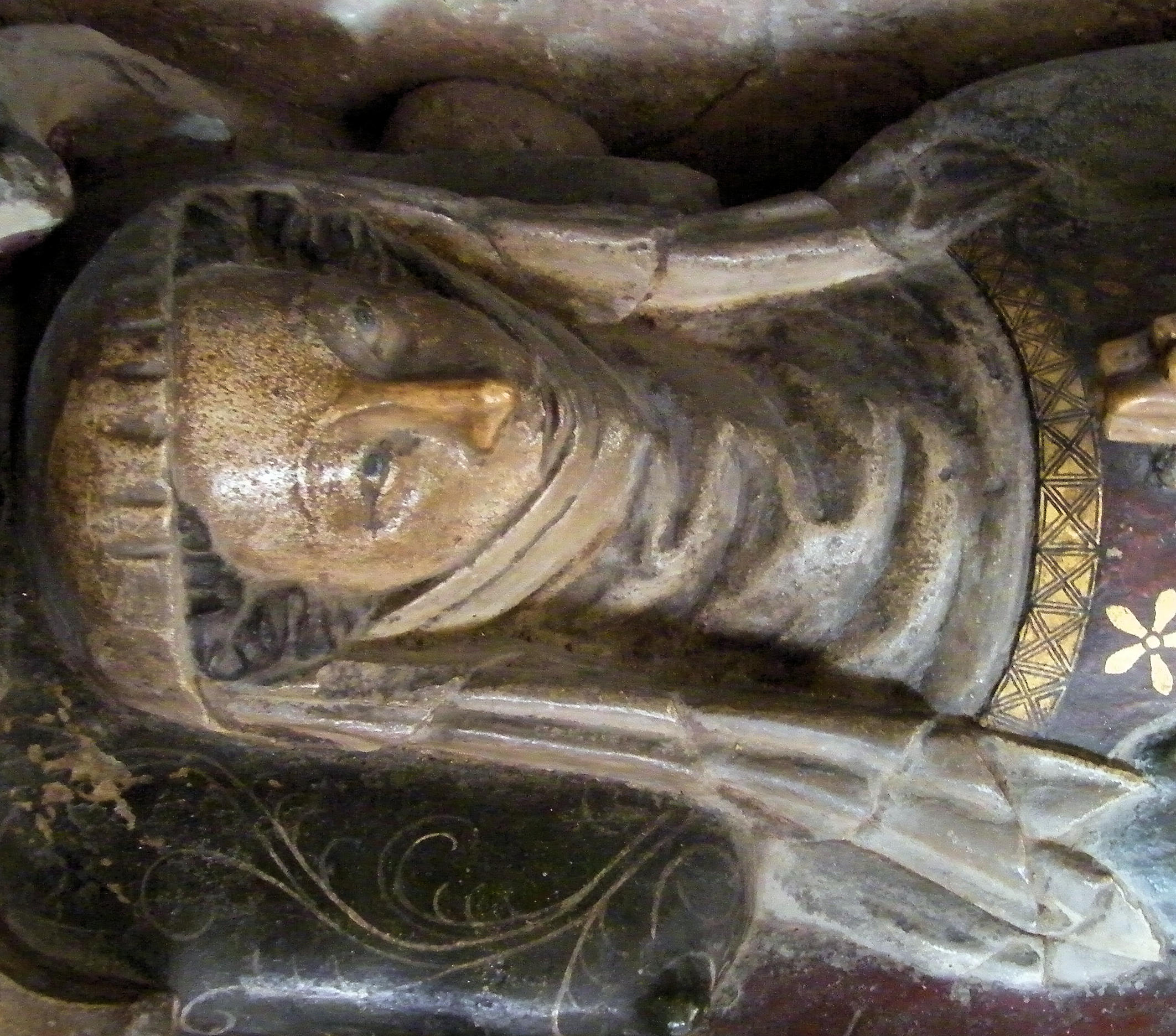
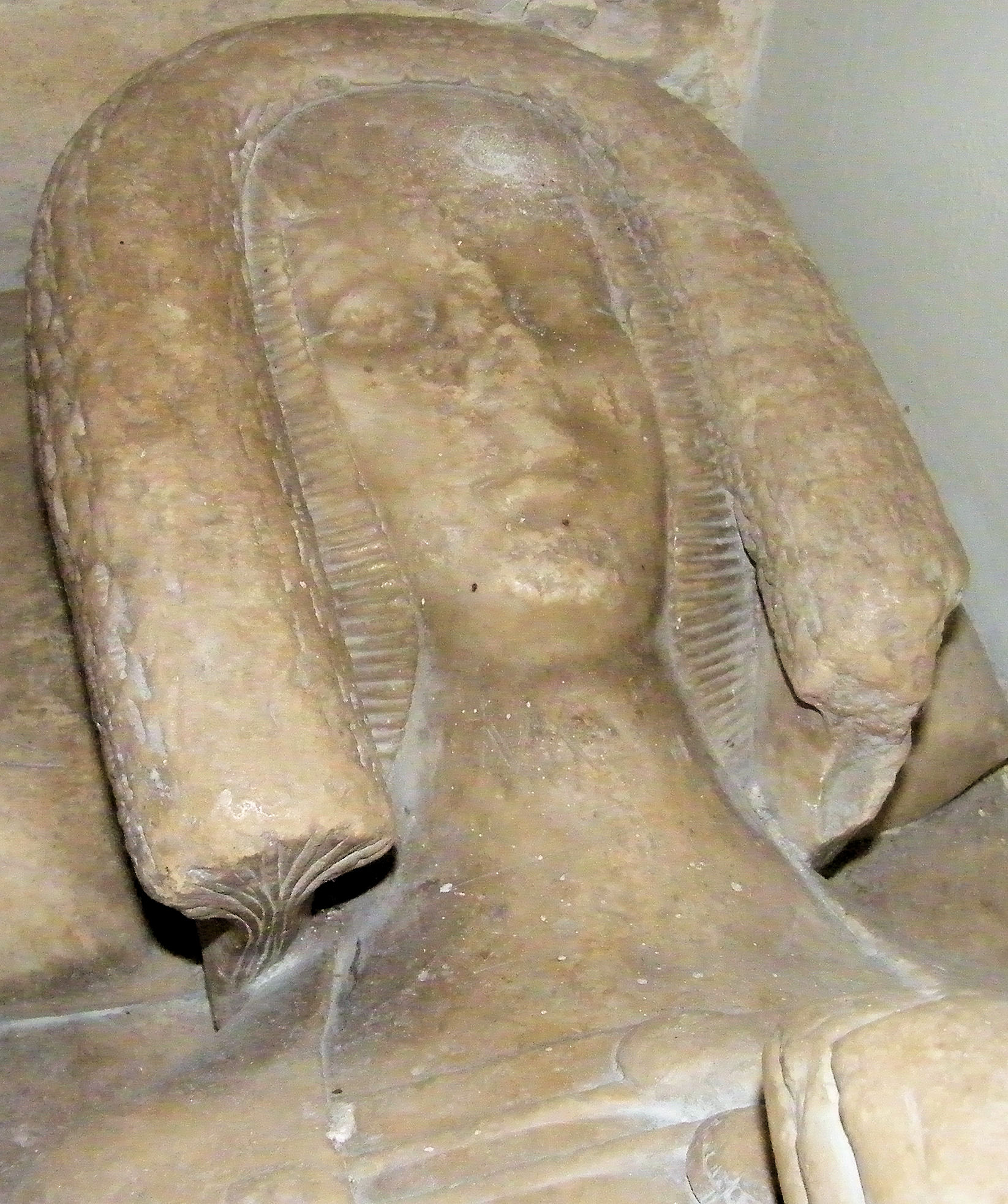
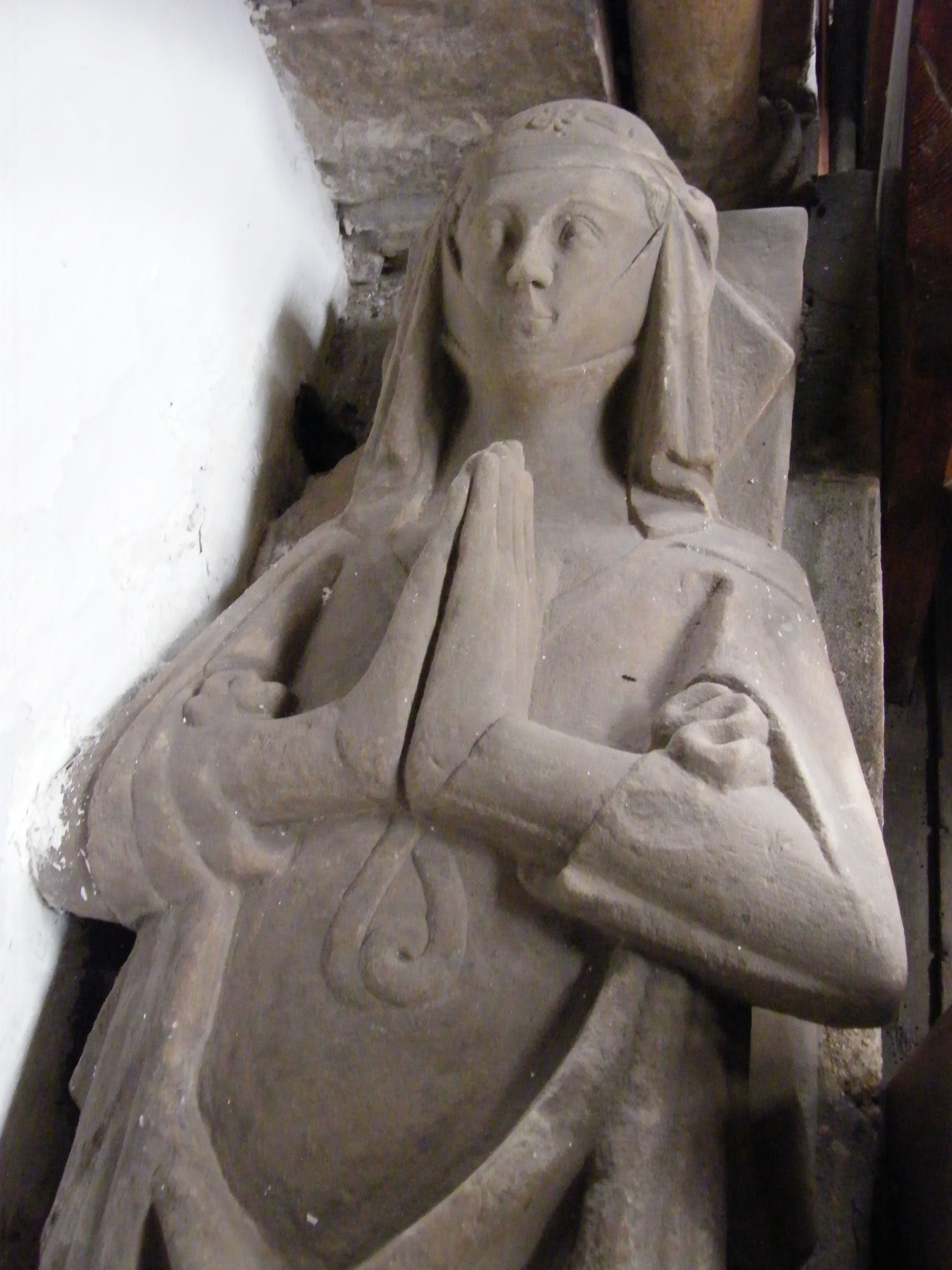
Barbet, fillet and veil, Hawisia de Muchegos, English Bicknor, 1350
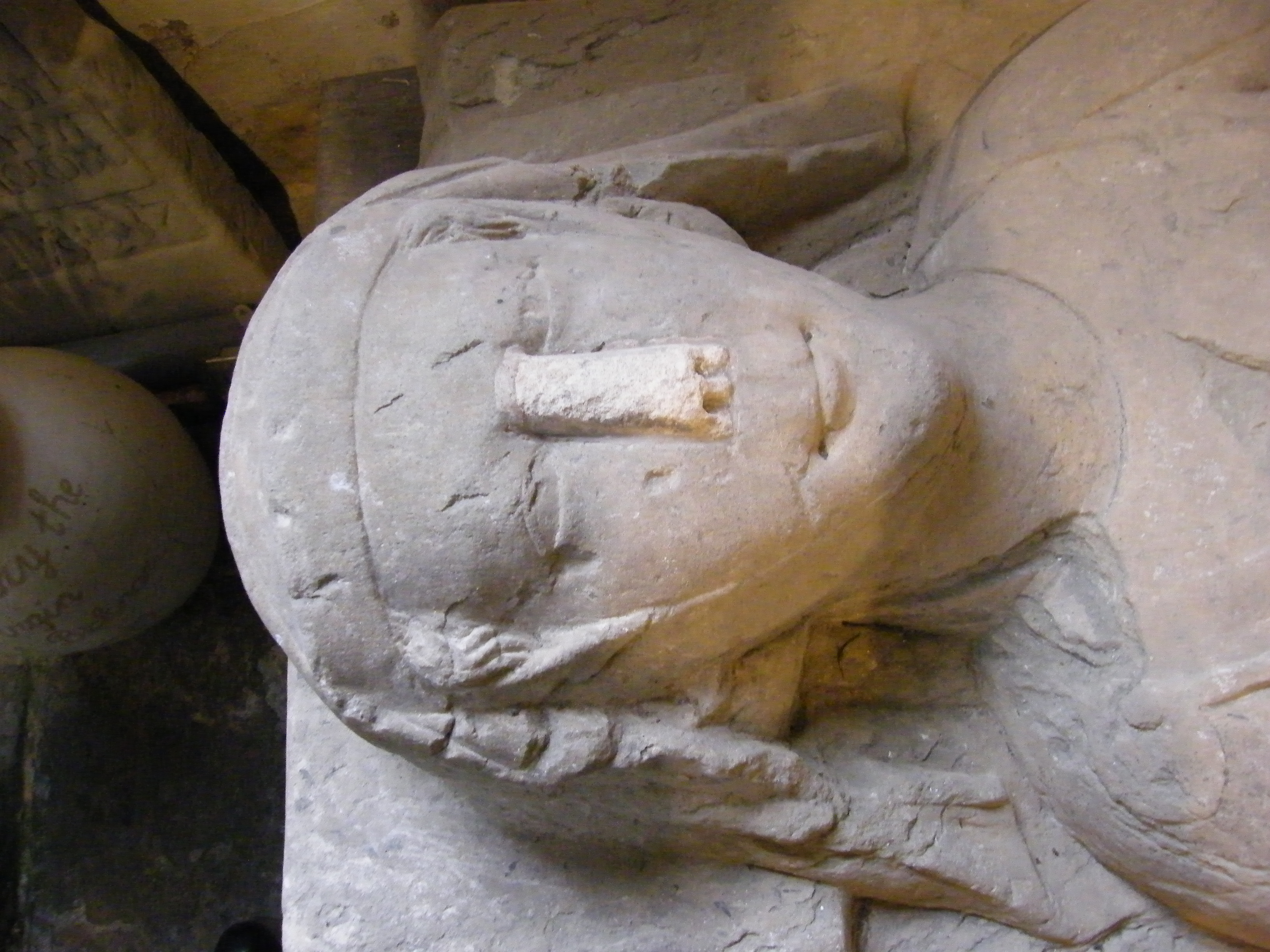
Barbette, Lady de Goshall, Ash, 1306
The Medieval Combat Society |
|
|
There is great variation in costume throughout the fourteenth century, particularly with headware, and it is important with reconstruction of costume to ensure that the various pieces would have been worn together, both those that would have been worn at the same time and matching quality.
Edward II - Edward III - Richard II
Tafeta a crisp plain smooth woven fabric was worn for the first time and being very expensive was worn only by ladies of the highest rank. Soft narrow weave wool was also worn for the first time and also scarlet cloth and a velvety material called fustian. Gowns were made of coarser cloths, russet and linens.
Married women in Northern and Western Europe generally wore some type of headcovering, either a barbet, wimple or hair net, however wearing a veil was not as strict as the 15th Century. Young women wore long flowing or plaited hair. Hair was parted in the centre and plaited to be displayed as coiled plaits or vertical plaits worn by the rich. False hair was sometimes used. Various combinations of hair, plaits, hair nets and covering were worn. Yellow hair was much esteemed, and ladies who were not favoured by nature, used saffron to colour their hair.
Chaplets made of a plait with fresh flowers and leaves, a length of silk braid or an embroidered band tied around the head, were worn by young men and women, girls and young brides may have worn their hair flowing with the chaplet. The Chaplet became less commonly seen through the 14th Century.
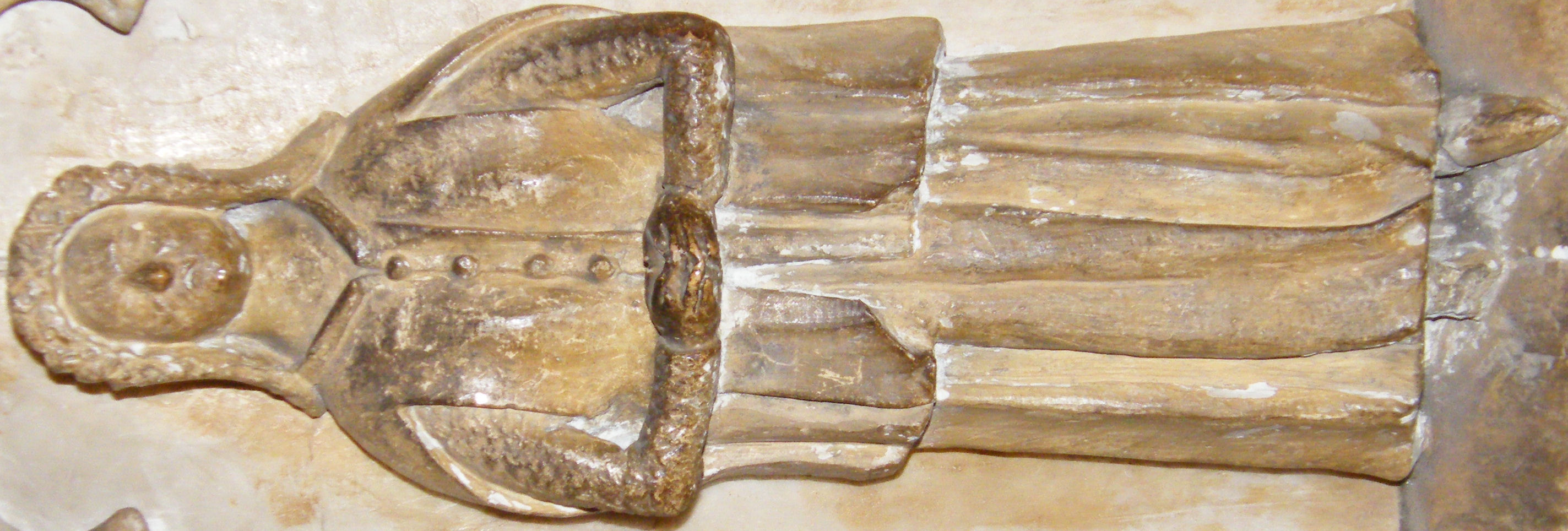
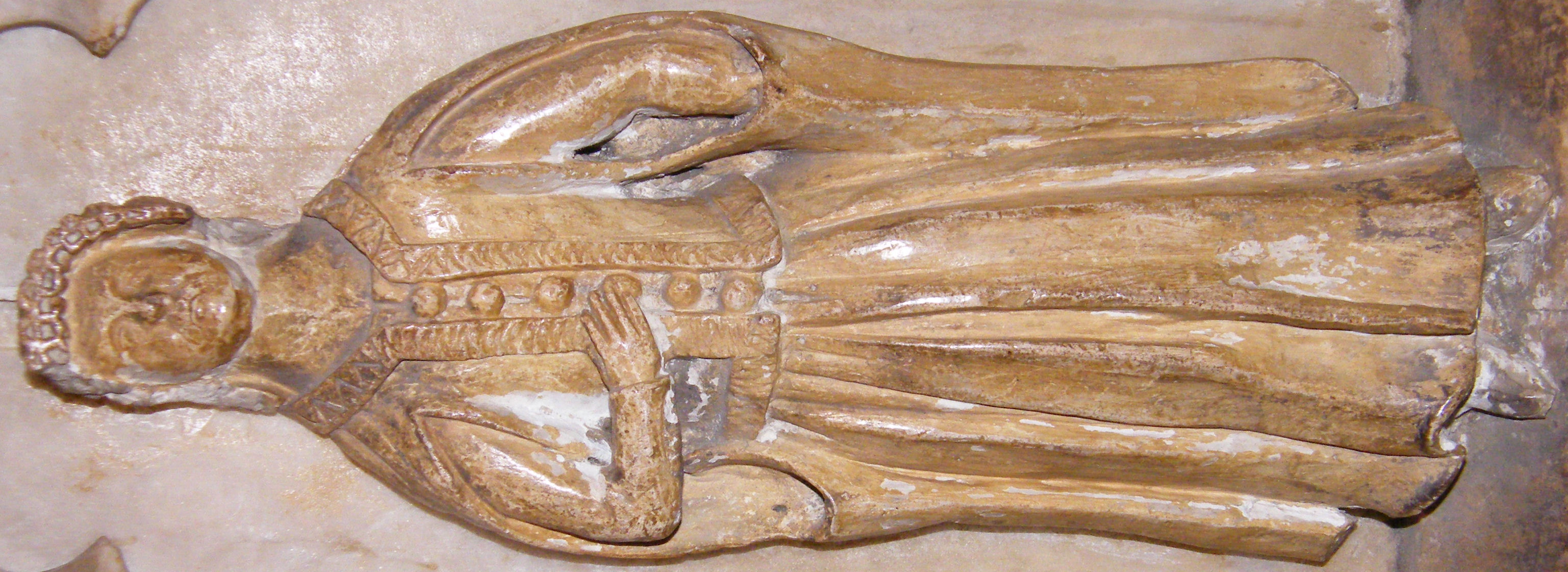
The barbette was worn from the 12th century and was a band of linen that passed under the chin, as a chin strap, and was pinned on top of the head. The barbet was worn with a linen fillet or headband, or with a linen cap called a coif, with or without a couvrechef (kerchief) or veil overall. The barbet and fillet or barbet and veil could also be worn over the crespine.
Barbet, fillet and veil, Hawisia de Muchegos, English Bicknor, 1350 |
Barbette, Lady de Goshall, Ash, 1306 |
|
|
The wimple is a linen or wool veil that covers the neck and throat, fastened with pins at the back of the neck, which was covered by the veil. A fillet was sometimes used around the head to hold the hair in place and could be worn above or below the wimple and set to display or hide the plaited hair. Over the 14th century the wimple became less common, being worn by older women and nuns. Pointed frontals of pearls were worn across the forehead, and fillets of silk or linen were so tied that long ends hung down the back.
Wimple, Eva de Boltby, Felixkirk, 1309 |
Wimple with veil over fillet, Margaret De Camoys, Trotton, 1315 |
Wimple, Eleanor Trayli, Woodford, 1316 |
Wimple, Joanna de Bohun, Hereford Cathedral, 1327 |
|
|
|
|
The Torque or 'Pie Hat'
Around the 12th century, the torque or toque was nothing more than a narrow band of cloth used to secure a woman's veil. Eventually the band widened into a stiff linen band or fillet which could be as wide as 4 inches.
The Fillet
The fillet started as a linen band around the head to hold in place the veil. Over time it evolved with the wealtyh using it to show off great expense in manufacture with silk being used and decorated with gold and precious stones or a precious metal coronet of flowers
| Wimple with fillet over veil, Lady, Ryther, 1327 |
 |
Crowns and Coronets
Crowns during the 13th century were simple and set with few jewels. Queens and noble ladies wore crowns as well as chaplets and ornate floral wreaths made from fine metalwork called guirlands.
By the 14th century, crowns were becoming more like those we know today. Gold, silver, precious and semi-precious stones and enamel were used. Goldsmiths in France, Northern Spain and Northern Italy were considered the best jewelers during this period, though Limoges was reputed as the best of all.
Crespine, a thick hairnet or snood made of gold, silver or silk thread. Over time, the crespine evolved into a mesh of jeweler's work that confined the hair on the sides of the head, and even later, at the back. This metal crespine was also called a caul, and remained stylish long after the barbet had fallen out of fashion.
The crispinette came into fashion in the second half of the 13th century and developed from the crespine. The hair was coiled into two gold cauls made from either fabric or fine metal wire over each ear and was held in place by a narrow fillet. The entire structure of cauls and fillets jointly was known as the crispinette. Almost always, a veil was worn with the crispinette, and was popular throughout the reign of Edward II. The fashion of dressing the hair in this manner was said to have been brought to the English courts by the French Princess Isabella who married Prince Edward II.
| Wimple, with fillet over veil and Crispinette, Lady, Bottesford, 1310 |
 |
Tressour Crispinette
The tressour crispinette is a containment net of goldsmithry or material worn on the head. The side pieces of the crispine became exaggerated with the addition of a more elaborate fillet. The tressour was highly decorated by the wealthy, with pearls, goldwork and jewelry and sometimes, a transparent silk veil. The tressour crispinette became the predecessor to the more fanciful Heart Shaped Hennin in the early 15th century.
were worn over the head dress and and made of wool, silk, linen, velvet, and lined or unlined, and with metal or fabric buttons. The wealthy wore highly decorative hoods. The hood would have been worn by the poor unable to keep up with the fashions of the rich, they would have plaited their hair and may have worn a wimple.
Over the chemise, women wore a loose or fitted gown called a cotte or kirtle, usually ankle or floor-length, and with trains for formal occasions. Fitted kirtles had full skirts made by adding triangular gores to widen the hem without adding bulk at the waist. Kirtles also had long, fitted sleeves that sometimes reached down to over the knuckles. ?The back was opened, and laced with ribbons, lacings have been found in dump sites and include finger looped braid and tablet-woven round cord.? The front of the kirtle was either spiral laced or had buttons made of metal or fabric.
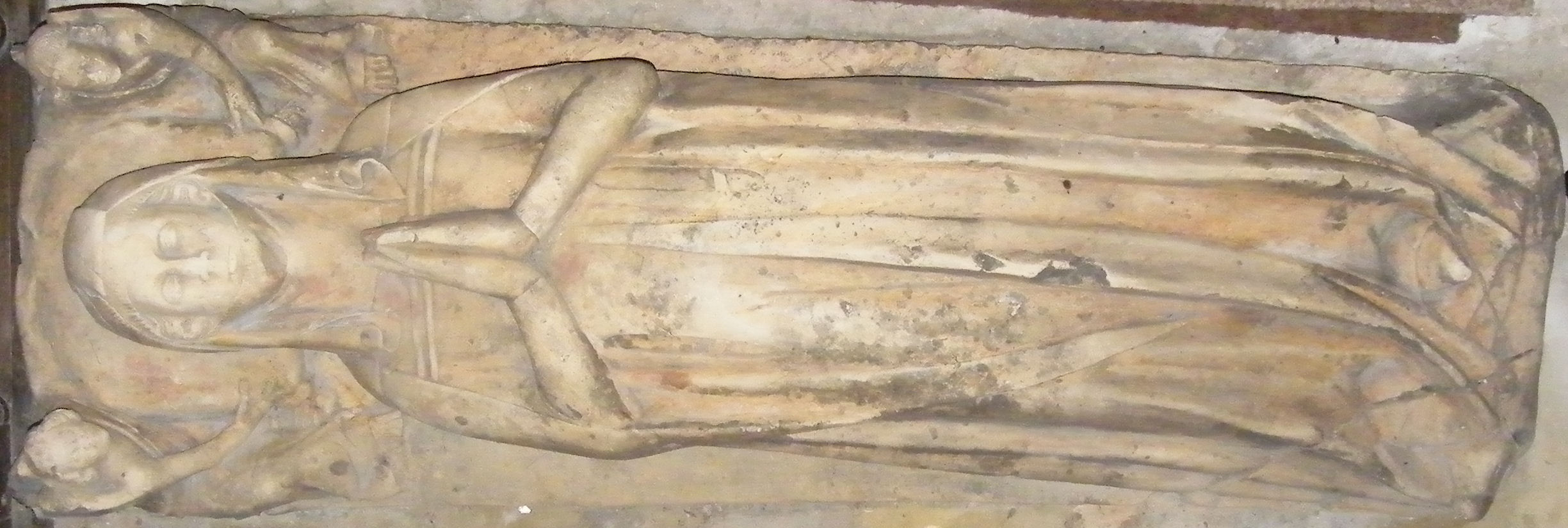
Over the kirtle was worn a sleeveless overgowns, tabards or surcotte, derived from the cyclas, an unfitted rectangle of cloth with an opening for the head that was worn in the 13th century. By the early 14th century, the sides began to be sewn together, creating the sleeveless overgown or surcoat.
| Surcoat with fitchets over over kirtle, and mantle over shoulders, Eva de Boltby, Felixkirk, 1309 | Sleeveless surcoat with open side showing kirtle and girdle, unknown lady, Bottesford, 1310 | Short sleeved surcoat showing lower sleeves of a buttoned kirtle, Margaret De Camoys, Trotton, 1315 | Surcoat with loose folds and mantle, Eleanor Trayli, Woodford, 1316 | Sleeveless surcoat showing sleeves of kirtle beneath, Hereford Cathedral, Joanna de Bohun, 1327 |
 |
 |
 |
 |
 |
Bliaud
A long belted overtunic worn from the eleventh to the early fourteenth century. Bliauds worn by women were ground length and had wide full length sleeves. The word derives from the German blialt, meaning cloth.
Aprons were often worn.
cloaks and mantles
Outdoors, women wore cloaks or mantles, often lined in fur. The cloaks of the wealthy were mostly full and had rich cords to fasten them accross the front, and the cloak was often decorated with the wearers coat of arms.
Women wore hose or stockings, although women's hose generally only reached to the knee, and were held by garters. It is debated, but women probably only wore the chemise and no braes or equivalent.
a girdle or belt with a puch may have been worn at the waist or a little lower. Pouches were made from a variety of materials including leather. Tassels hanging off the bottom were popular.
Aprons were worn by various trades and craftswomen.
Embroidered material became more popular from the mid C14 with patterns woven into materials. Garments became decorated with ornate buttons. In the 1330's edges of garments were cut away to form dagging and became a very popular fashion. Royalty wore gold and silver tissue, being made of material woven with the gold and silver, nobles of high rank wore bright tan, scarlet, murrey, greens blues, red, tawny, red-browns and greys.
Hair was worn in plaits around the face, the rich having gold or silver or embroided tubes on either side of the face which was suspended from a narrow band worn around the head. Evidence exists for false hair being used. Ladies wore veils and wimples, those of the rich being made of fine transparent silk. Yellow hair was much esteemed, and ladies who were not favoured by nature, used saffron to colour their hair.
Chaplets, Crowns and Coronets
Crowns during the 13th century were simple and set with few jewels. Queens and noble ladies wore crowns as well as chaplets and ornate floral wreaths made from fine metalwork called guirlands.
By the 14th century, crowns were becoming more like those we know today. Gold, silver, precious and semi-precious stones and enamel were used. Goldsmiths in France, Northern Spain and Northern Italy were considered the best jewelers during this period, though Limoges was reputed as the best of all.
Floral coronet over veil with pin, Unknown Lady, Norwell, 1350
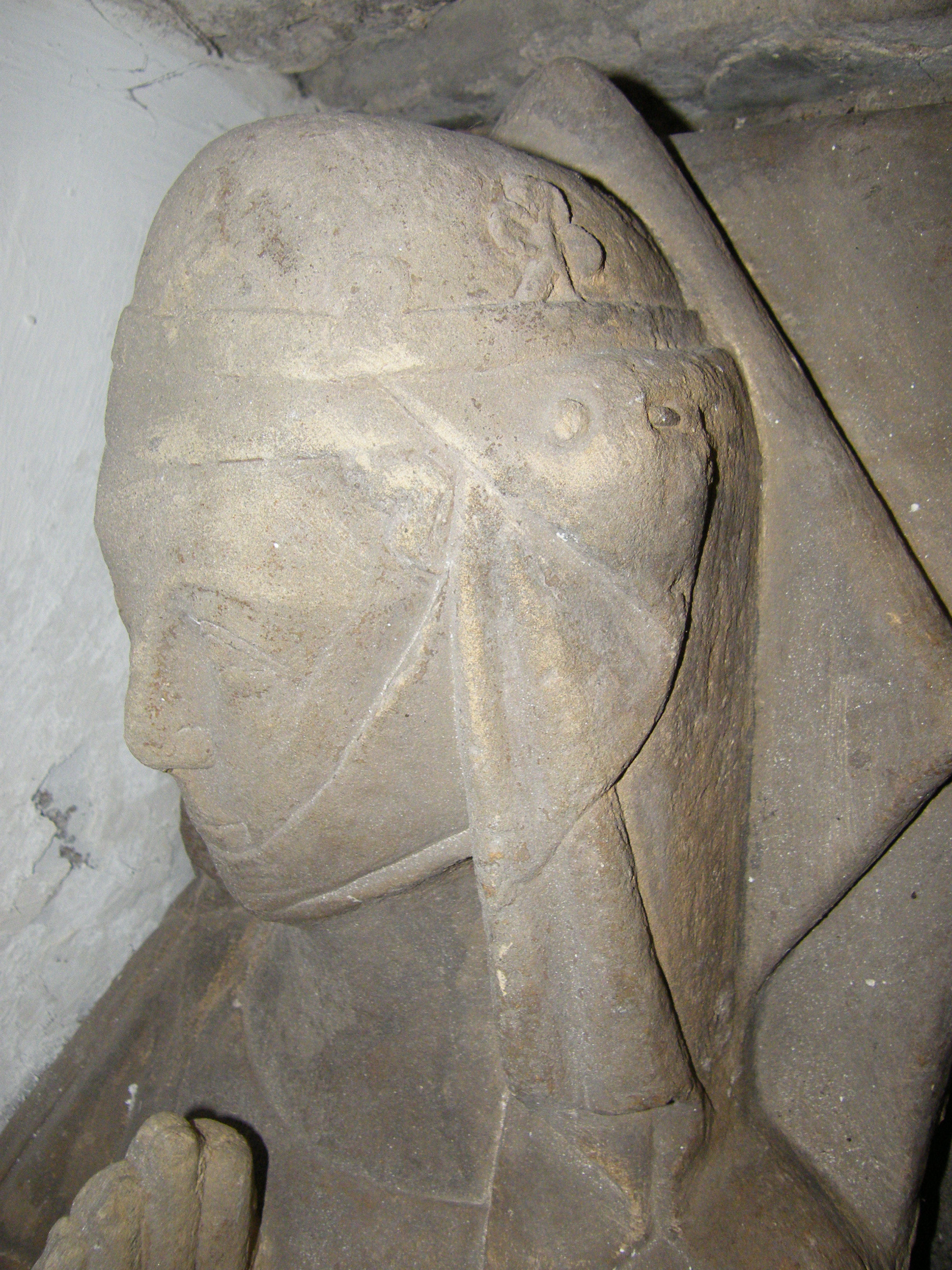
The barbette was a band of linen that passed under the chin, as a chin strap, and was pinned on top of the head. The barbette was worn with a linen fillet or headband, or with a linen cap called a coif, with or without a couvrechef (kerchief) or veil overall. The barbet and fillet or barbet and veil could also be worn over the crespine. The Barbet was by the reign of Edward III only by older women, widows, and nuns and passed out of fashion by mid-century.
| Barbet and fillet over veil, Hawisia de Muchegos, English Bicknor 1350 |
|
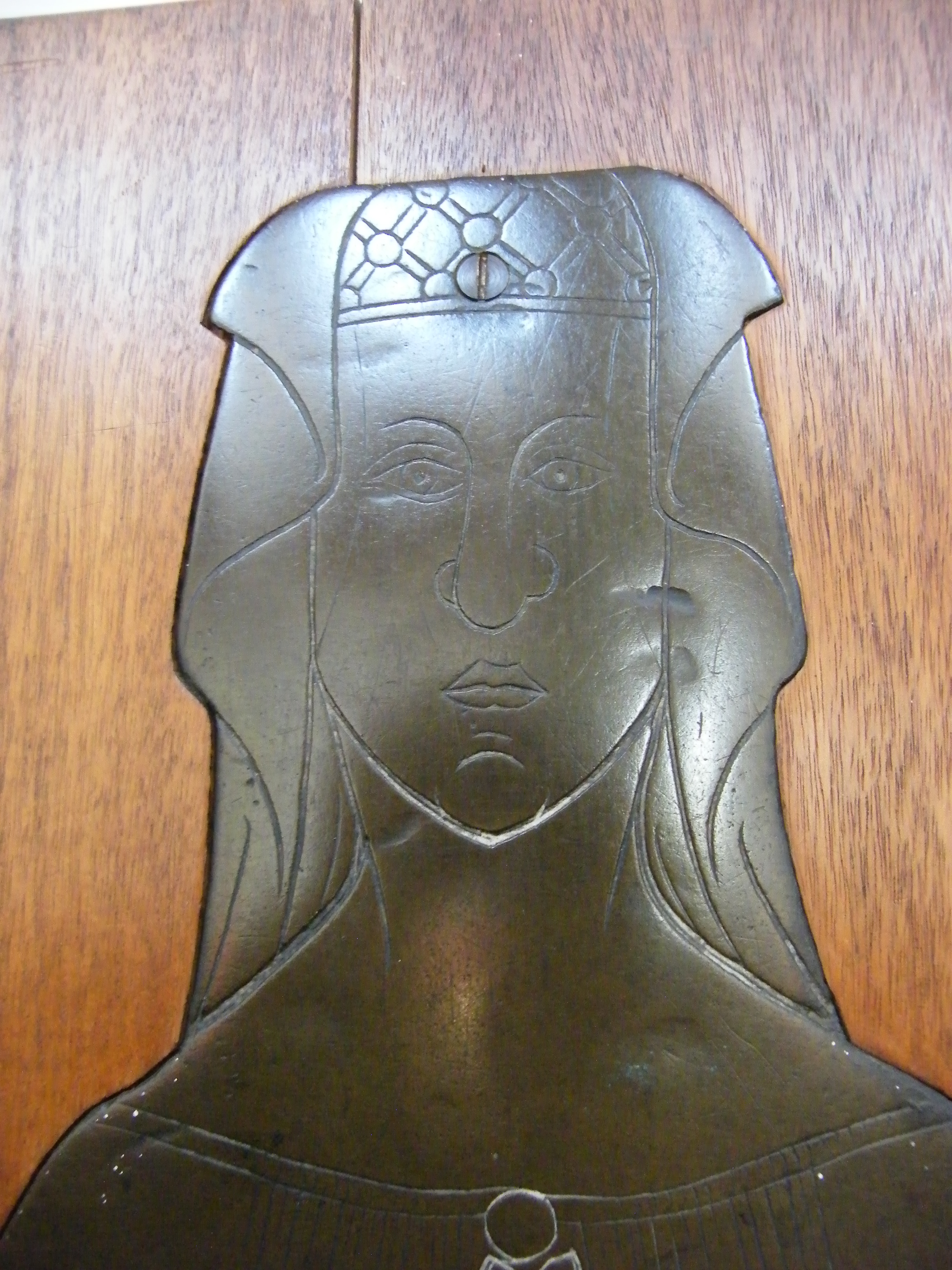
A simple linen or silk cloth worn over the head.
Veil or kerchief with fillet, without wimple, Margaret Briggs, Berkhampstead, 1370 |
Veil or kerchief without wimple,Agnes Kyggesfolde, Rusper, 1370 |
 |
 |
The wimple is a veil that covers the neck and throat. A fillet was sometimes used around the head to hold the hair in place and could be worn above or below the wimple and set to display or hide the plaited hair. Over the 14th century the wimple became less common, being worn by older women and nuns.
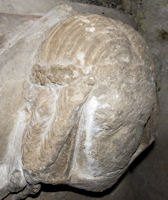
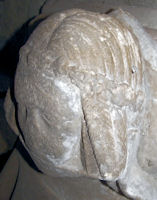
| Wimple without head veil and hair plaited on sides of head, Elizabeth de Northwood, Minster 1335 | Wimple with coiled hair in two loops (possibly supported by a metal framework or net called a caul) with floral circlet called a fillet, wife of Thomas de la More 1347, Northmoor |
 |
   |
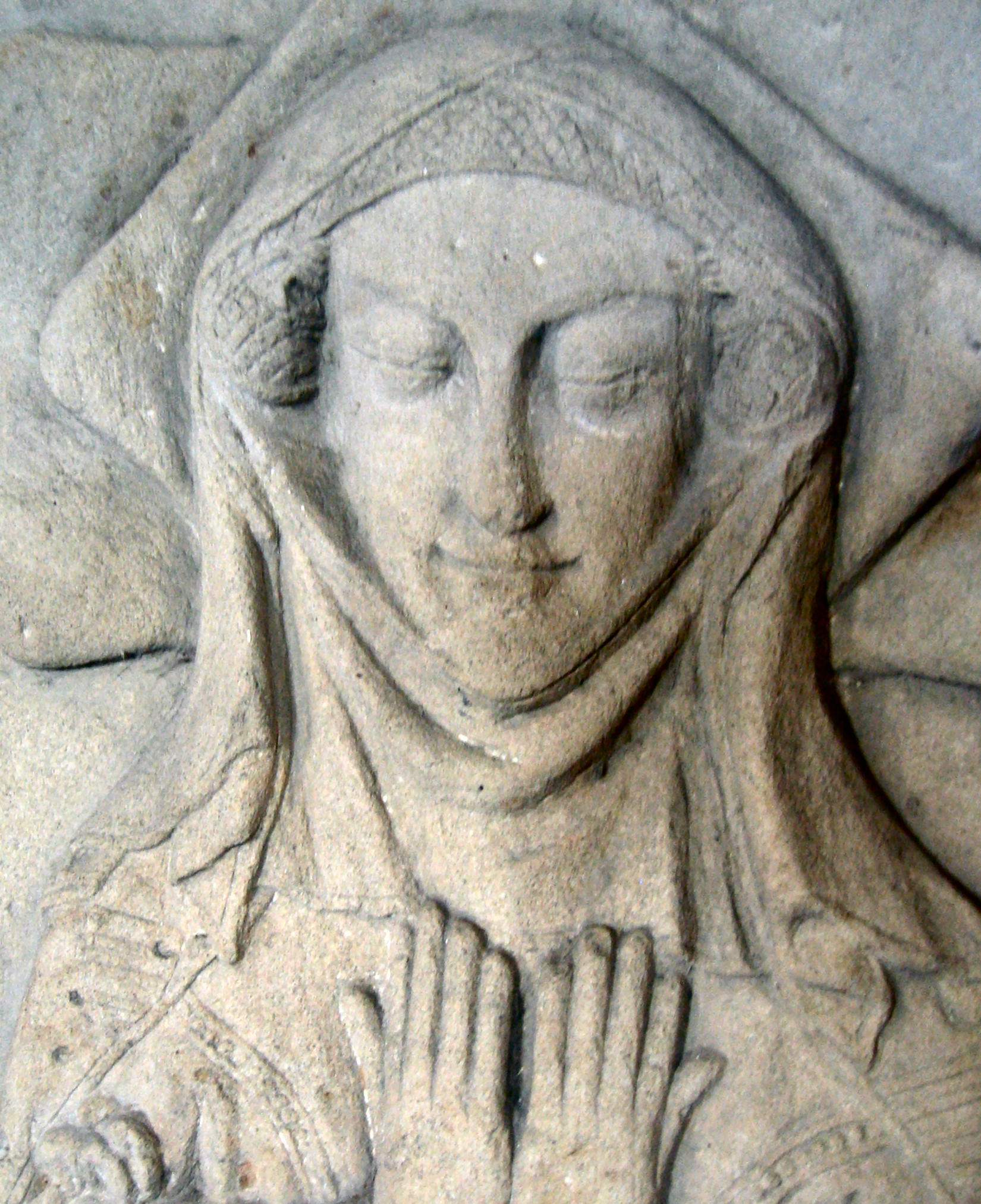
By the time of Edward III, the crispinette was still worn by women of middle to upper class and noble class both for day and formal occasions. The hair was coiled into and held in place by nets called cauls made from either fabric or fine metal wire over each ear and was held in place by a narrow fillet. The entire structure of cauls and fillets jointly was known as the crispinette. Generally, a veil was worn with the crispinette.
| Caul or fret showing beneath veil and wimple, Matilda Fitzalan, 1340, Danby Wiske |
 |
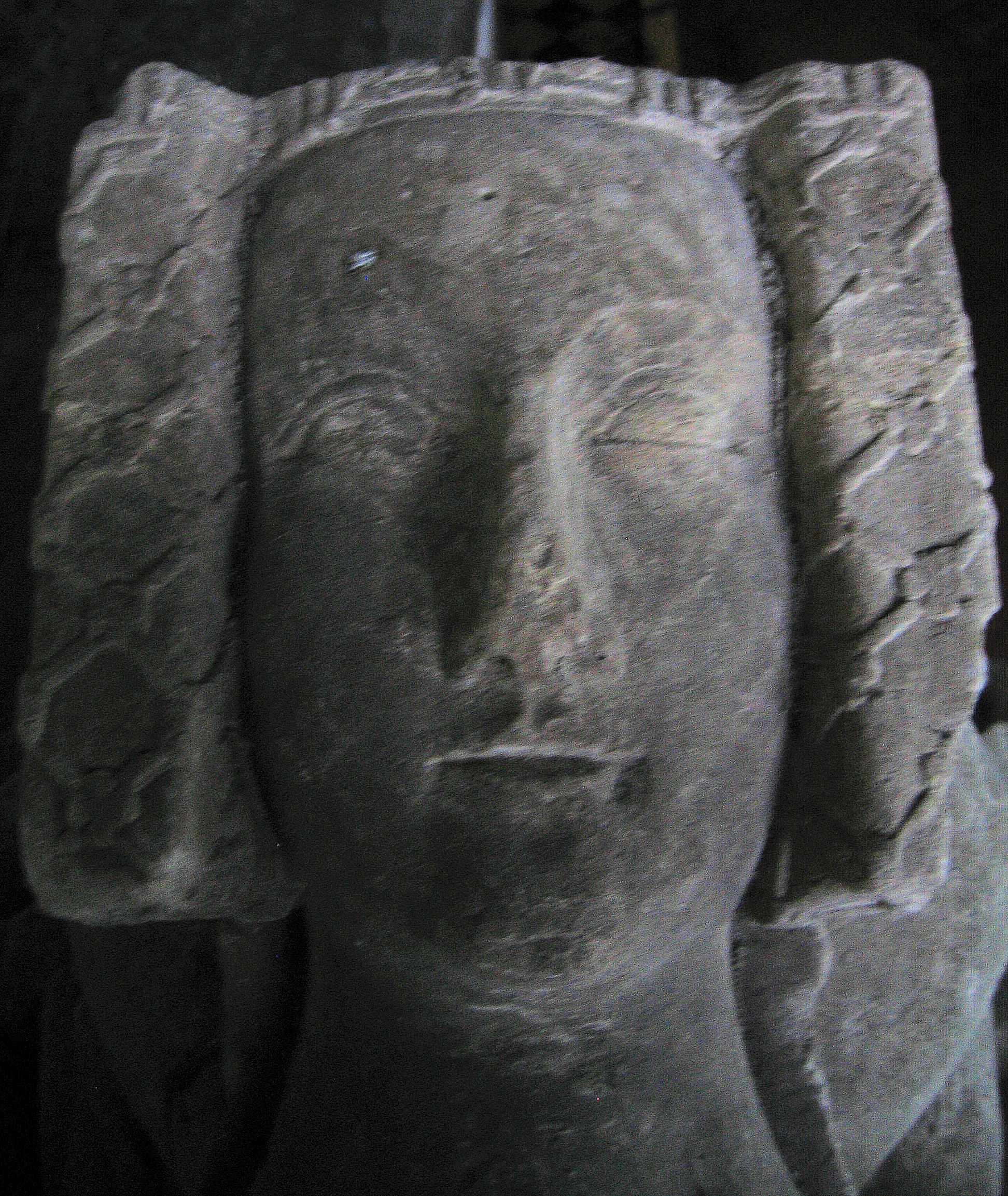
Cylinder cauls or templars came into fashion during the 14th century during the time period of King Edward III by his wife Queen Philippa who brought this style to England. Plaited hair was worn on either side of the head and tied in front of the ears and often across the front of the head. The upper classes encased the hair in in gold, silver or embroidered cylinders. The cylinders were attached to a fillet or coronet, also heavily jeweled. As this headware was generally only available to the upper echelons of society, it was worn with the finest gauzy, silk veils. Cylinder cauls were considered suitable for formal wear and special occasions, fit for state occasions and special celebrations. They are not thought to have been worn everyday around the house.
Cylinder Cauls or Templars, Eleanor Mohun, Atherington, 1349 |
 |
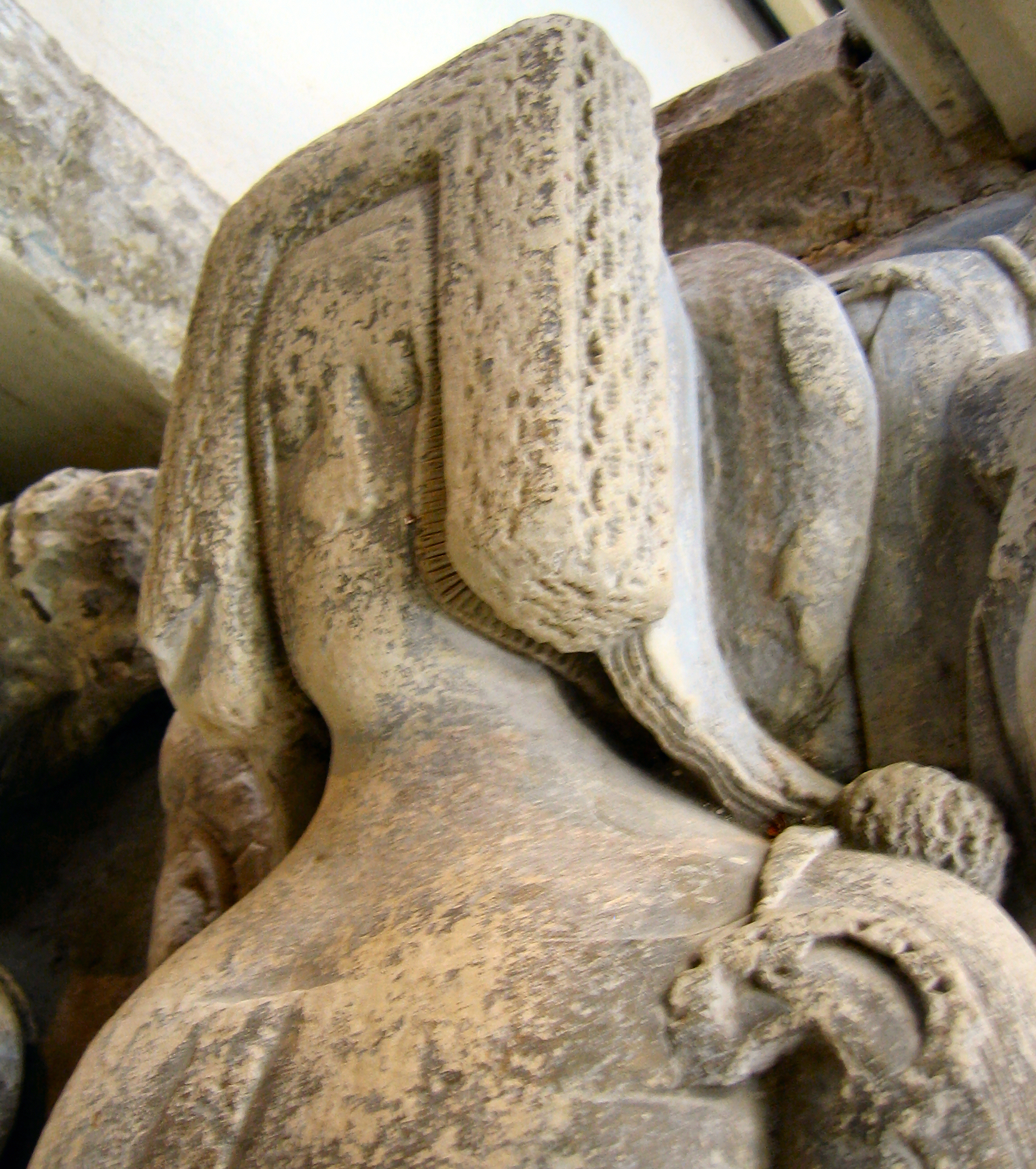
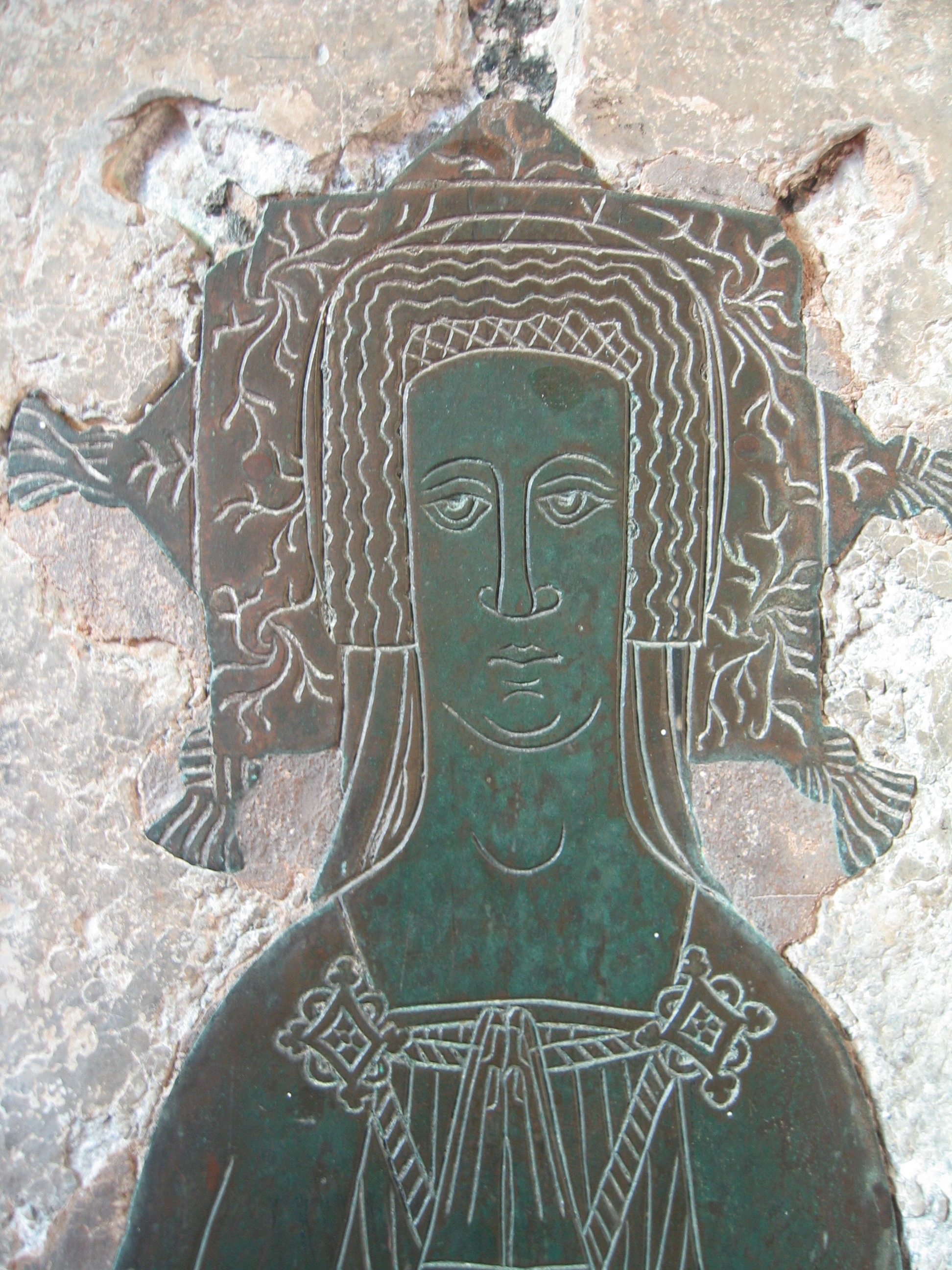
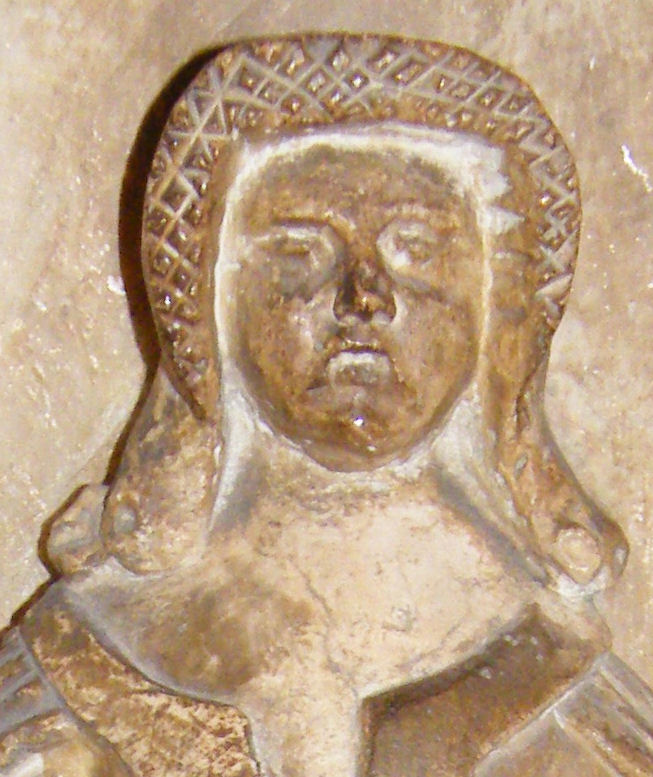
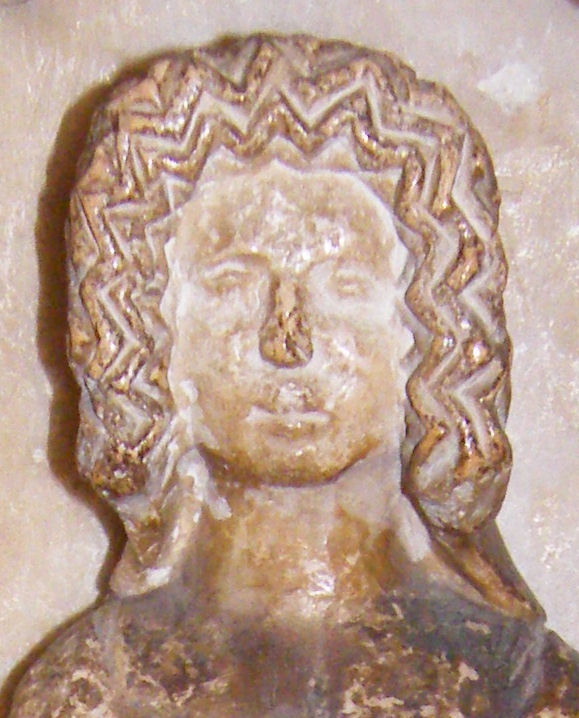
From around 1349 the nebulé headdress (Its name in German territories was the krüseler) was worn, the ruffle was made of seceral semicircular pieces of fine linen, having the straight edges pleated or ruffled together, and either worn around the face or curving only over the top of the head. A gilded or jewelled circlet was worn by the nobility, or ornate net was worn. Veils, nets, barbettes and hoods were worn by all. Though this was the most popular in areas like Germany, Bohemia, Hungary and England, it was completely absent in France. Various patterns of ruffling can be seen, and several types in a single work indicate that it is more than the artistic intepretation of the artist.
Ruffle, Nebule or Goffered head dress, Margaret Payer, Halstead, 1349 |
Ruffled veil or nebulé-headdress, Margaret Torrington, Berkhampstead, 1356 |
Ruffled veil or nebulé-headdress Margaret Albyn, Hemel Hempstead, 1360 |
Ruffled veil or nebulé-headdress, Amicia Le Haddon, Wantage, 1361 |
Nebule headdress, Thomas Beauchamp and wife Katherine Mortimer weeper 2, Warwick, 1369 |
 |
 |
 |
 |
 |
| Nebule headdress, Thomas Beauchamp and wife Katherine Mortimer weeper 4, Warwick, 1369 | Nebule headdress, Thomas Beauchamp and wife Katherine Mortimer weeper 10, Warwick, 1369 | Nebule headdress, Thomas Beauchamp and wife Katherine Mortimer weeper 24, Warwick, 1369 | Nebule headress showing hair braid on inside, Margaret Blanket, Bristol, 1371 | |
 |
 |
 |
 |
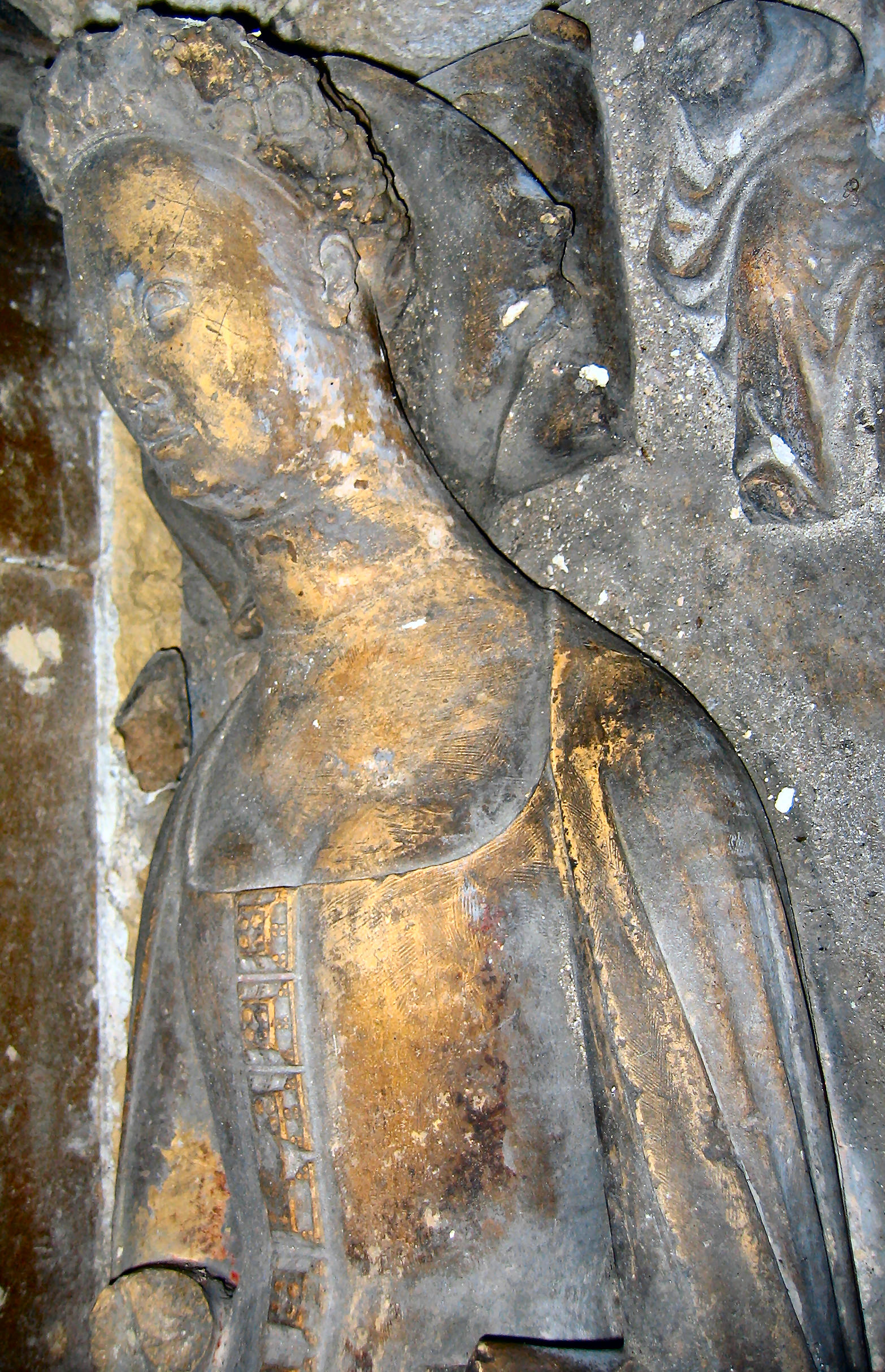
The reticulated headdress evolved from the crepinette retained the golden fretwork caul confining the hair on either side of the face, but no longer had the fillet over the cauls. It had a large padded roll instead. Over time as the top of the padded roll extended upwards, the middle of the roll descended into a V at the centre of the forehead forming the heart shaped hennin. The heart shaped hennin was worn alongside the hennin and the horned headdress of the lower classes.
| Reticulated headress, wife of Henry of Berkhamstead, Berkhamsted, 1370 | Reticulated headdress, lady Hiltons, Swine in Holderness, 1372 |
 |
 |
were worn over the head dress and and made of wool, silk, linen, velvet, and lined or unlined, and with metal or fabric buttons. The wealthy wore highly decorative hoods. The hood would have been worn by the poor unable to keep up with the fashions of the rich, they would have plaited their hair and may have worn a wimple.
Shift or Chemise
A shift or chemise was worn as an undergarment made of linen or silk for the wealthy. Linen was made from the flax plant and was relatively easy to bleach and clean of sweat and body oils providing a layer protecting the skin from what may often have been a coarse wool, as well as helping to stop the sweat and body oils from entering into the layer above.
Kirtle or Cotte
Over the chemise, women wore a loose or fitted gown called a cotte or kirtle, usually ankle or floor-length, and with trains for formal occasions. Fitted kirtles had full skirts made by adding triangular gores to widen the hem without adding bulk at the waist. Kirtles also had long, fitted sleeves that sometimes reached down to over the knuckles, and buttoned from wrist to elbow. Over the 14th century the sleeves became tighter and the number of buttons increased. Lacings have been found in dump sites and include finger looped braid and tablet-woven round cord. The front of the kirtle was either spiral laced or had buttons made of metal or fabric. The neckline was rounded, but by around 1340 it began to deepen and widen. A narrow belt was worn around the hips with it. Small vertical slits were cut into the kirtle called fitchets to allow acces to the purse hanging on the girdle beneath. Unmarried women often wore the kirtle without an over gown.
The surcoat during the reign of Edward III, could be shaped with a wide neckline and with or without short sleeves. Towards the end of the reign, the sleeves tended to be long.
| Surcoat with short sleeves, Clarissa la Warre, Laxton, 1341 | Surcoat showing kirtle and girdle beneath, Wentiliana, Dodford, 1375 |
 |
 |
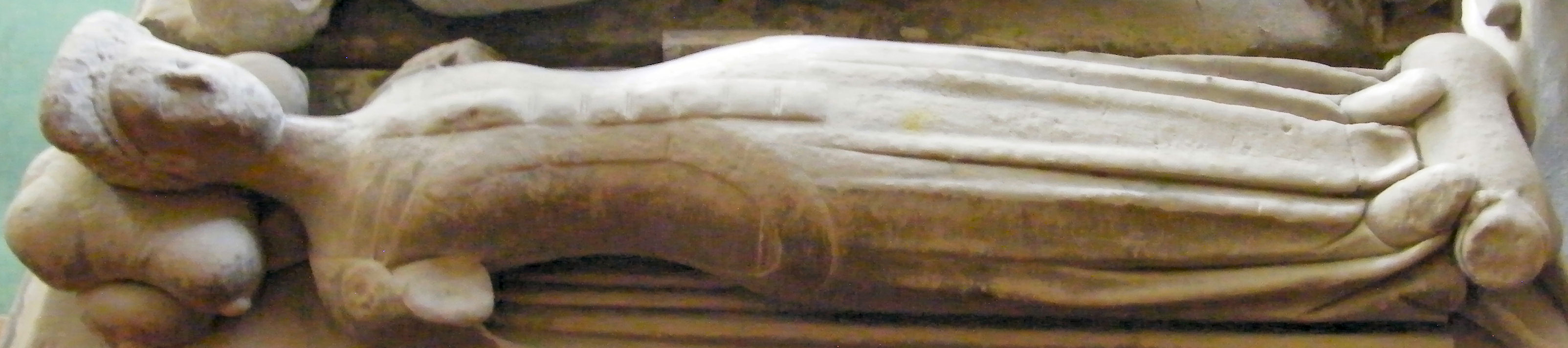
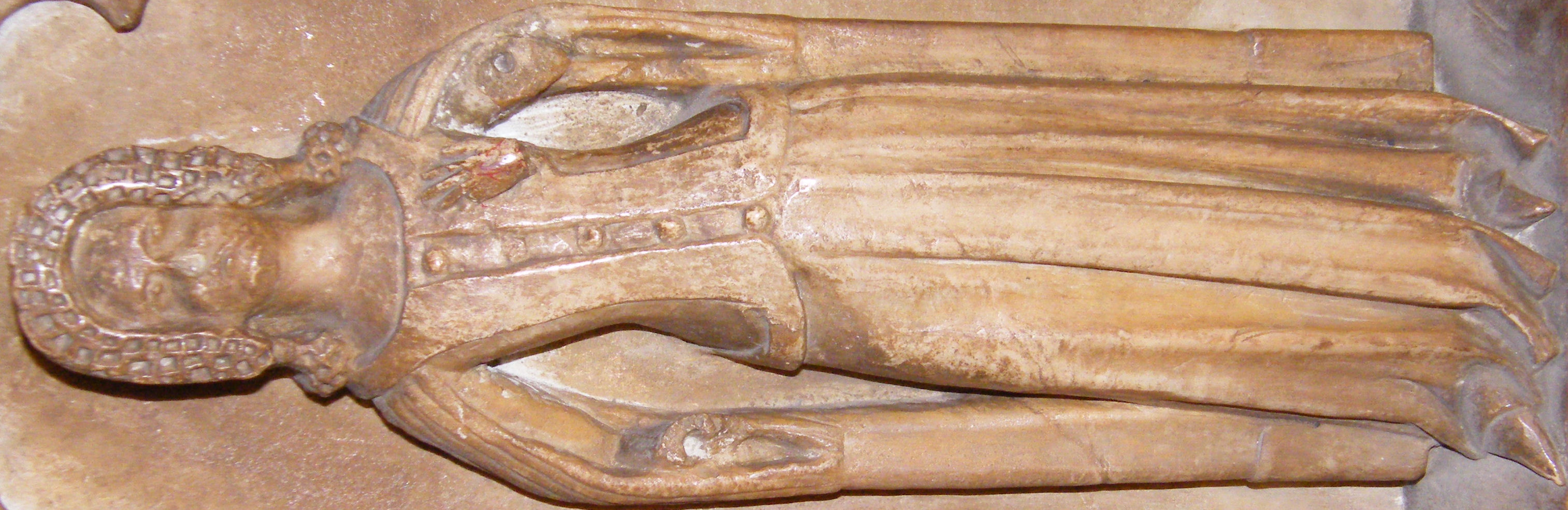
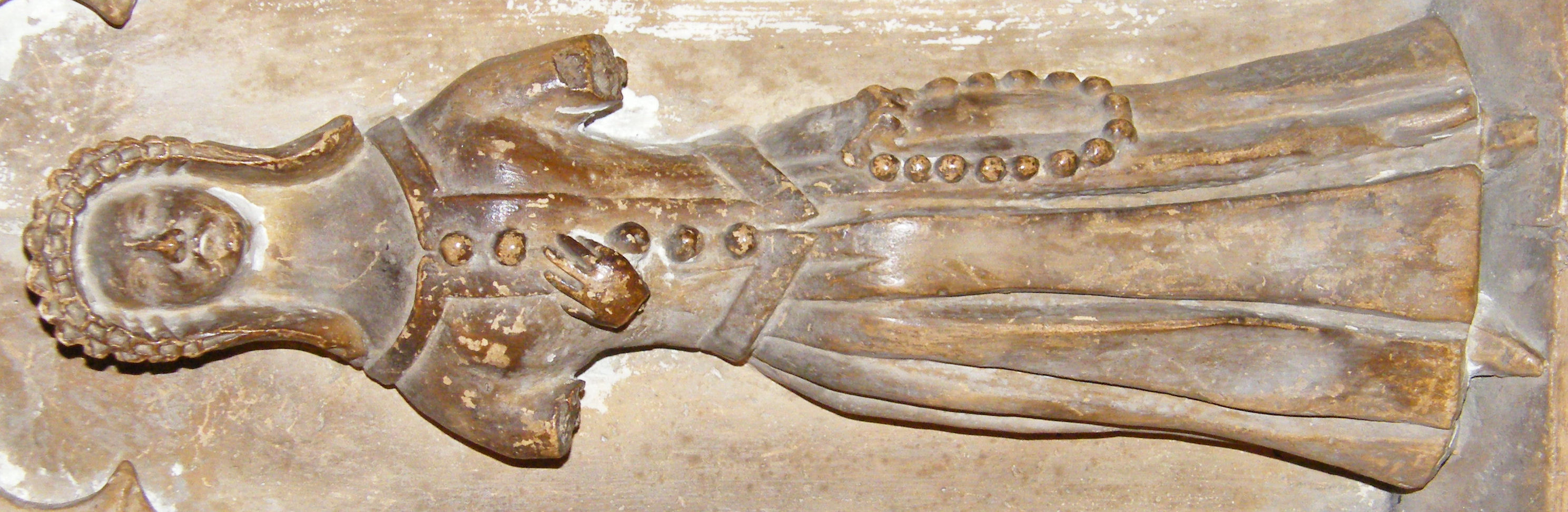
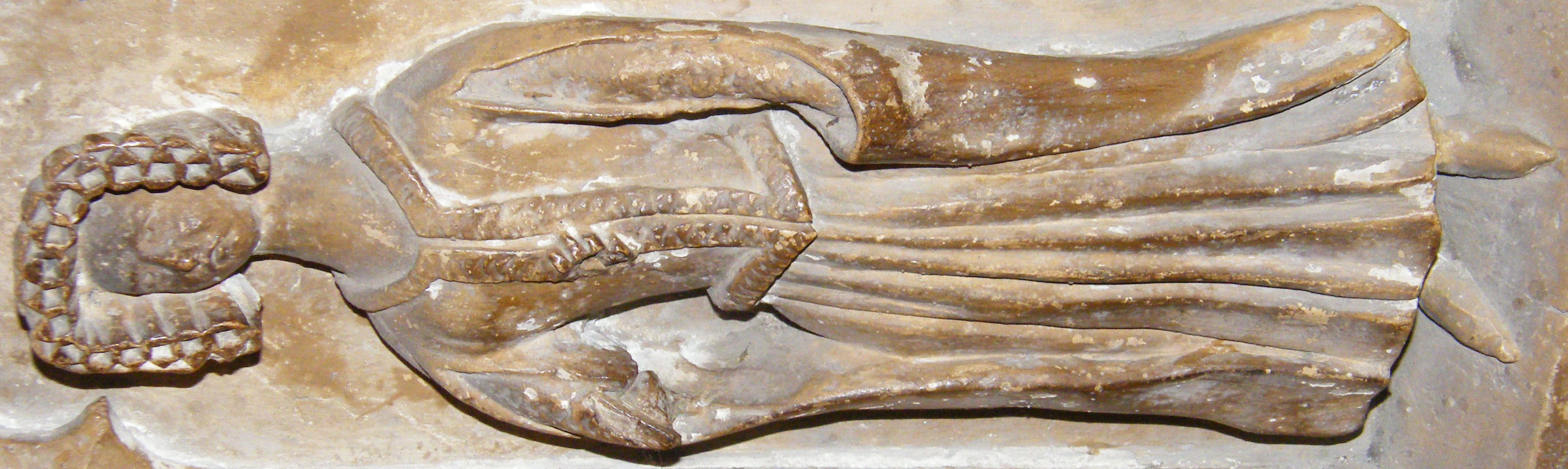
From about 1349, the sideless surcoat was worn over the kirtle by rich and poor. It was cut away at the sides leaving a small panel at the front and back, and allowed the kirtle beneath to be seen, the sideless surcoat was often had the addition of fur from the neck to the hip, and decorated down the front with jewels instead of buttons. Silks, satins Taffeta and scarlet cloth were used by the rich and by others flannel (fine linen), soft wool, linens and russet. The bodice part of the surcot ouvert always was cut independently from the loose skirt, and was seamed into it later. The former had a wide plastron in front, which was decorated with fur around the neckline and the sleeve cut.
| Sideless Surcoat and mantle or cloak | Sideless surcoat, Margaret Payer, Halstead 1349 | Sideless surcoat, Lady Berkhamsted, Berkhamsted, 1370 | Sideless surcoat, Thomas Beauchamp and wife Katherine mortimer weeper 2, Warwick, 1369 | Sideless surcoat, Thomas Beauchamp and wife Katherine mortimer weeper 10, Warwick, 1369 |
 |
 |
 |
 |
 |
| Sideless surcoat, Thomas Beauchamp and wife Katherine mortimer weeper 12, Warwick, 1369 | Sideless surcoat, Thomas Beauchamp and wife Katherine mortimer weeper 16, Warwick, 1369 | Sideless surcoat, Thomas Beauchamp and wife Katherine mortimer weeper 22, Warwick, 1369 | Sideless surcoat, Thomas Beauchamp and wife Katherine mortimer weeper 26, Warwick, 1369 | Sideless surcoat, Thomas Beauchamp and wife Katherine mortimer weeper 30, Warwick, 1369 |
 |
 |
 |
 |
 |
| Sideless surcoat, Thomas Beauchamp and wife Katherine mortimer weeper 32, Warwick, 1369 | ||||
 |
The cotehardie was not as closely associated with courtly-aristocratic costume as the surcot ouvert, but was considered as an outdoor garment. It often had a low cut neck exposing the shoulders and was tight down to the hips, with heavy folds to the ground and a row of buttons down the front, with long sleeves which developed into the decorative tippets (white piece of linen or contrasting material or fur, attached to the upper arm and wore down from a few inches to several feet, to trail on the floor). Tippets were worn by the wealthy members of society. In 1347 a certain Jeanne de Presles bequeathed a black cotehardie trimmed with miniver to her maid. Among the many varieties of this garment some can be decorated with buttons in front, and to its sleeves the characteristic coudieres or tippets could be added: the hanging, opened and lengthened parts of the cuff, which might also be trimmed with fur. Two edged pocket slides can be observed as well in some cases.
| Cotehardie with tippets and kirtle showing beneath, Margaret Torrington, Berkhamsted, 1356 | Cotehardie, Thomas Beauchamp and wife Katherine mortimer weeper 24, Warwick, 1369 |
 |
 |
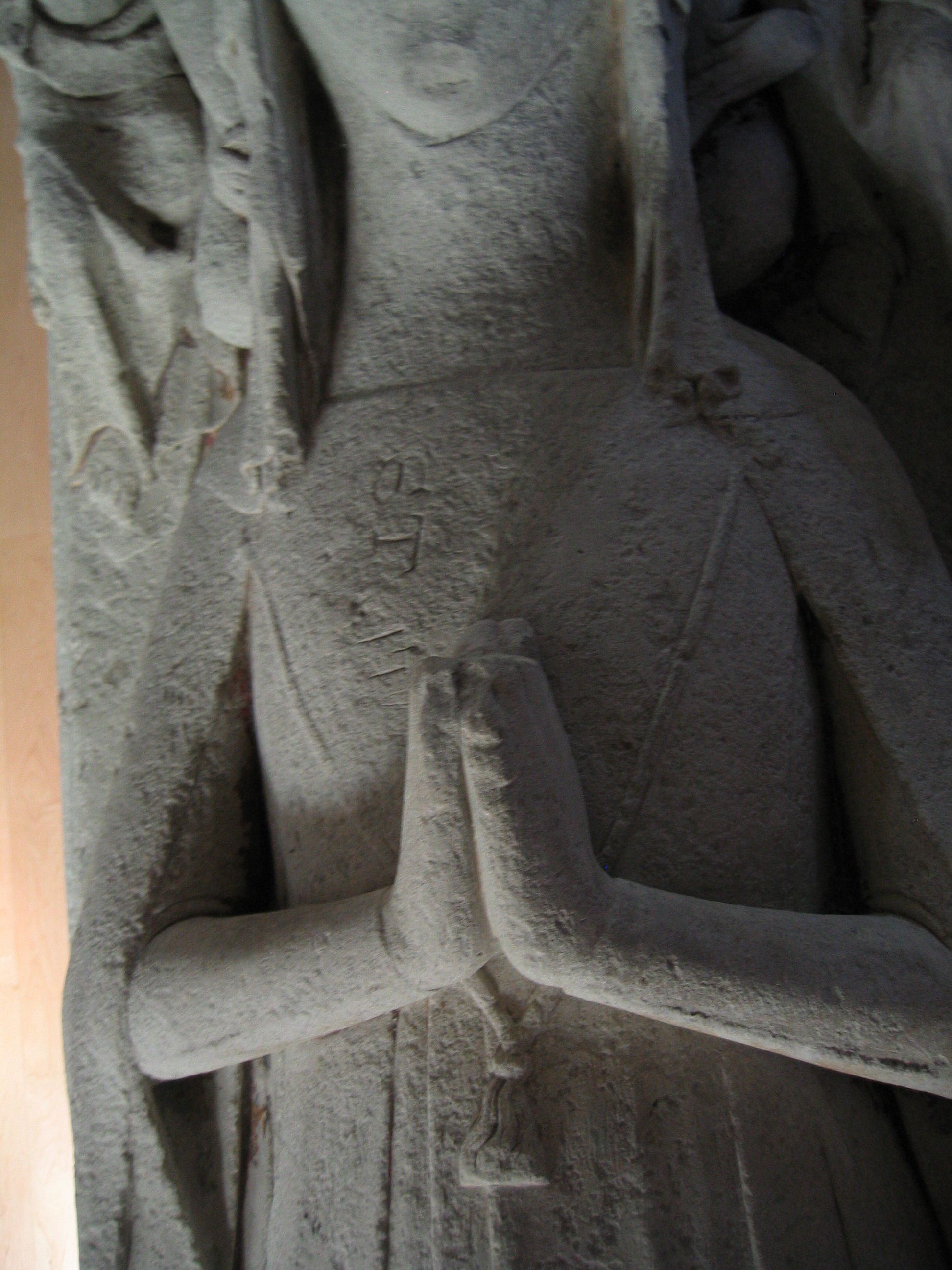
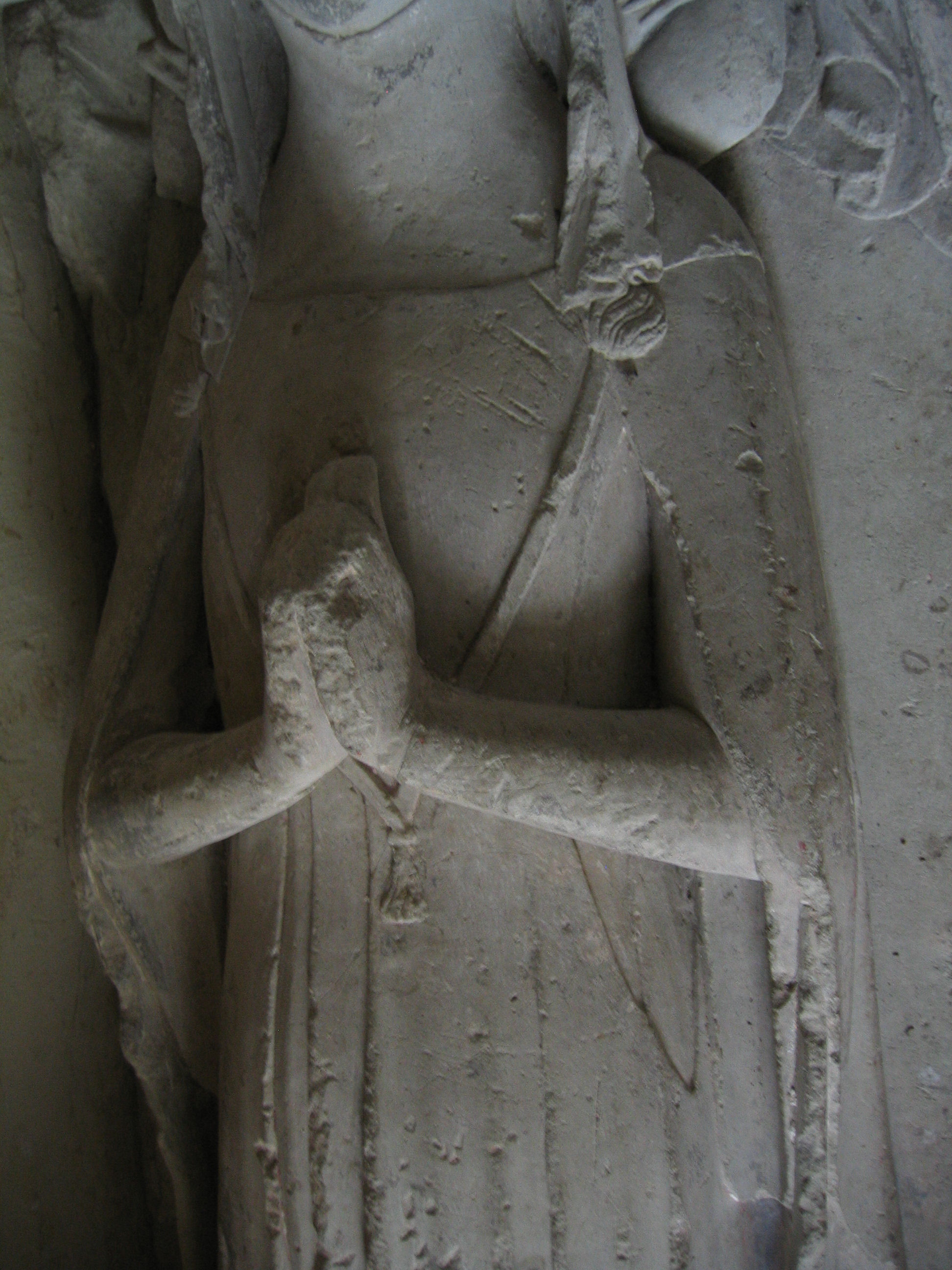
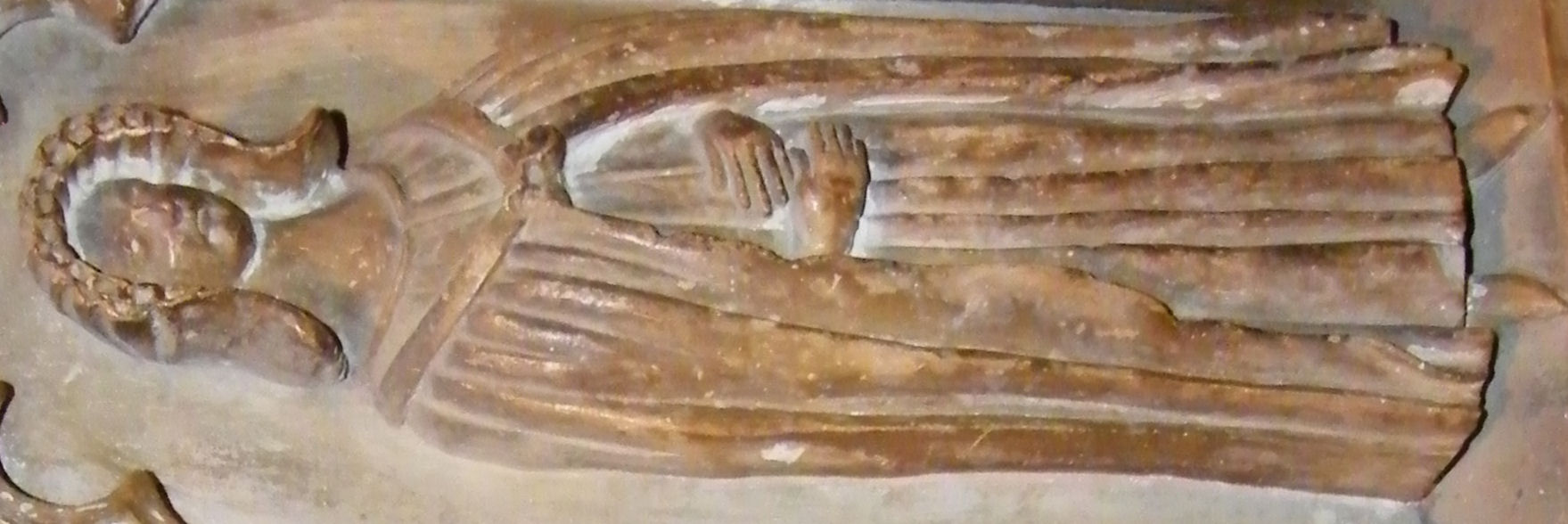
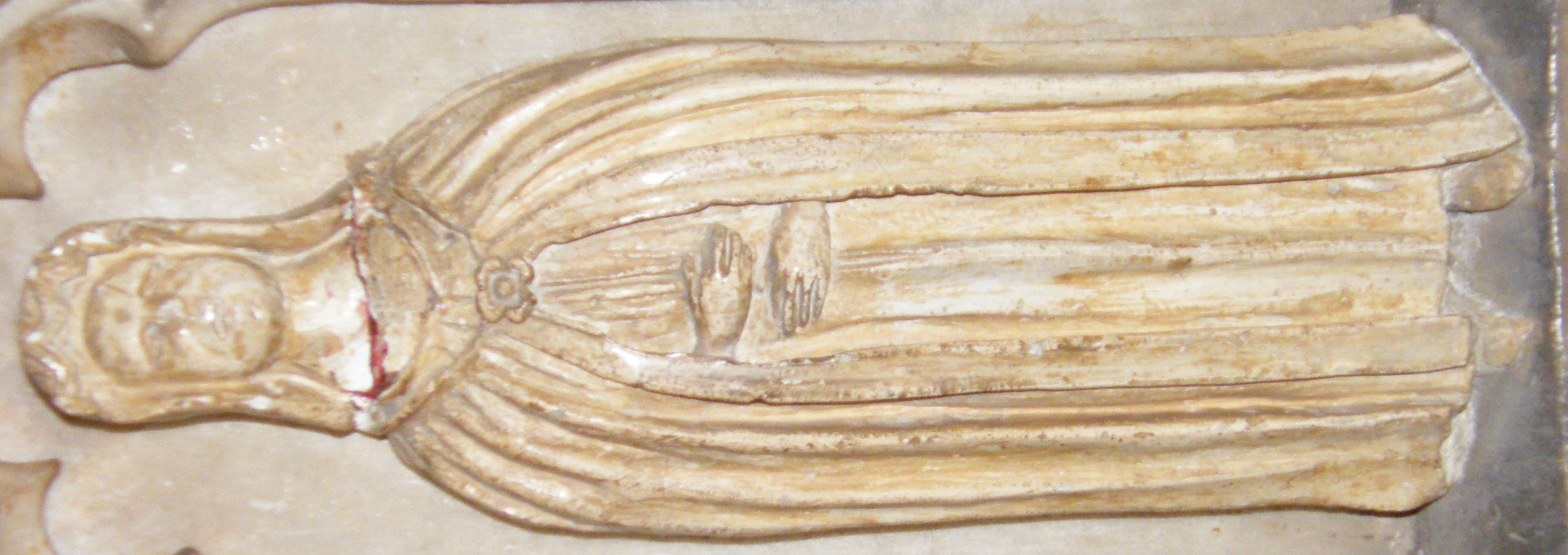
Cloaks and mantles also belonged to female costume. The gardecorps was used in cold weather, and therefore was lined with fur. The cloches à chevaucher, as its name indicates, was worn when riding. For ceremonial occassions a loose mantle came into usage, often pleated at the shoulders, and decorated with embroidery, appliquéd pieces or cords. It was called the corset rond. Tassels and cords appeared on cloaks.
| Cloak clasp and cord with tassel, Margaret de Ifield, Ifield, 1347 | Cloak and clasp with tassel, Eleanor Baynard, Silchester, 1348 | Cloak with cord, Unknown Lady, Norwell, 1350 | Cloak and clasp with cord, Margaret Albyn, Hemel Hempstead, 1360 | Cloak with clasp, Thomas Beauchamp and wife Katherine mortimer weeper 4, Warwick, 1369 |
 |
 |
 |
 |
 |
| Cloak with clasp, Thomas Beauchamp and wife Katherine mortimer weeper 14, Warwick, 1369 | Cloak with clasp, Thomas Beauchamp and wife Katherine mortimer weeper 18, Warwick, 1369 | Cloak with clasp, Thomas Beauchamp and wife Katherine mortimer weeper 28, Warwick, 1369 | Cloak with clasp, Thomas Beauchamp and wife Katherine mortimer weeper 34, Warwick, 1369 | Cloak with clasp, Thomas Beauchamp and wife Katherine mortimer weeper 36, Warwick, 1369 |
 |
 |
 |
 |
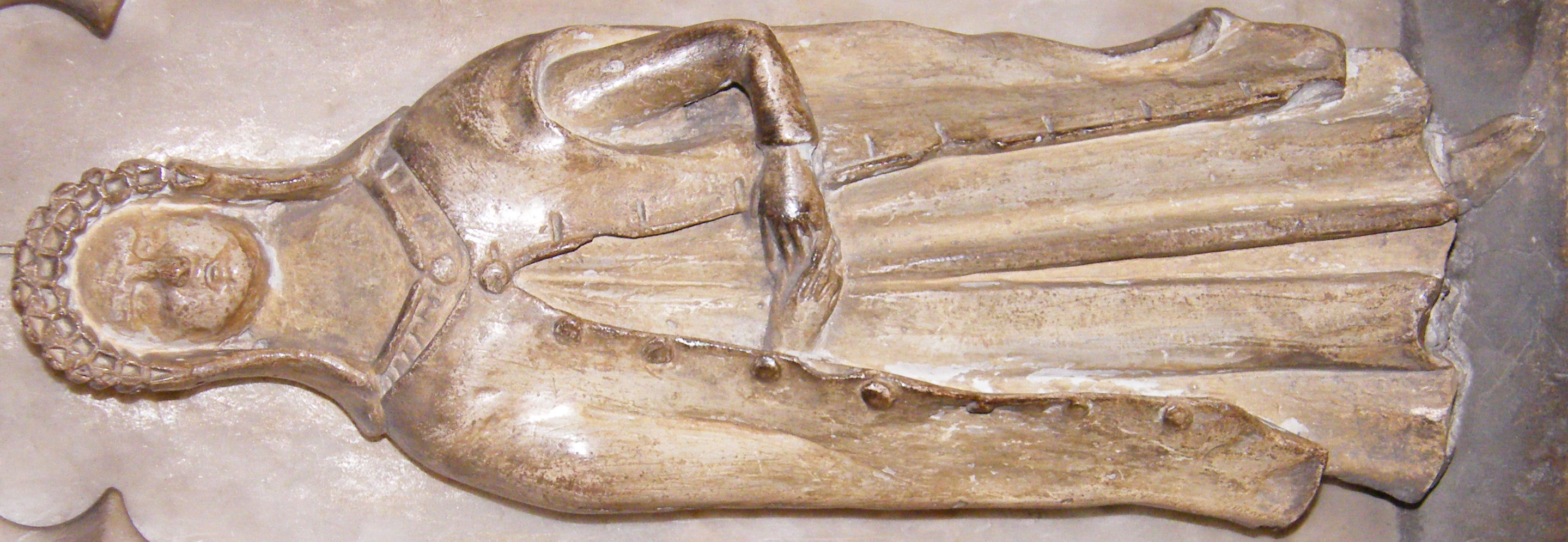 |
| Cloak and cord with tassle, Agnes Kyggesfolde, Rusper, 1370 | ||||
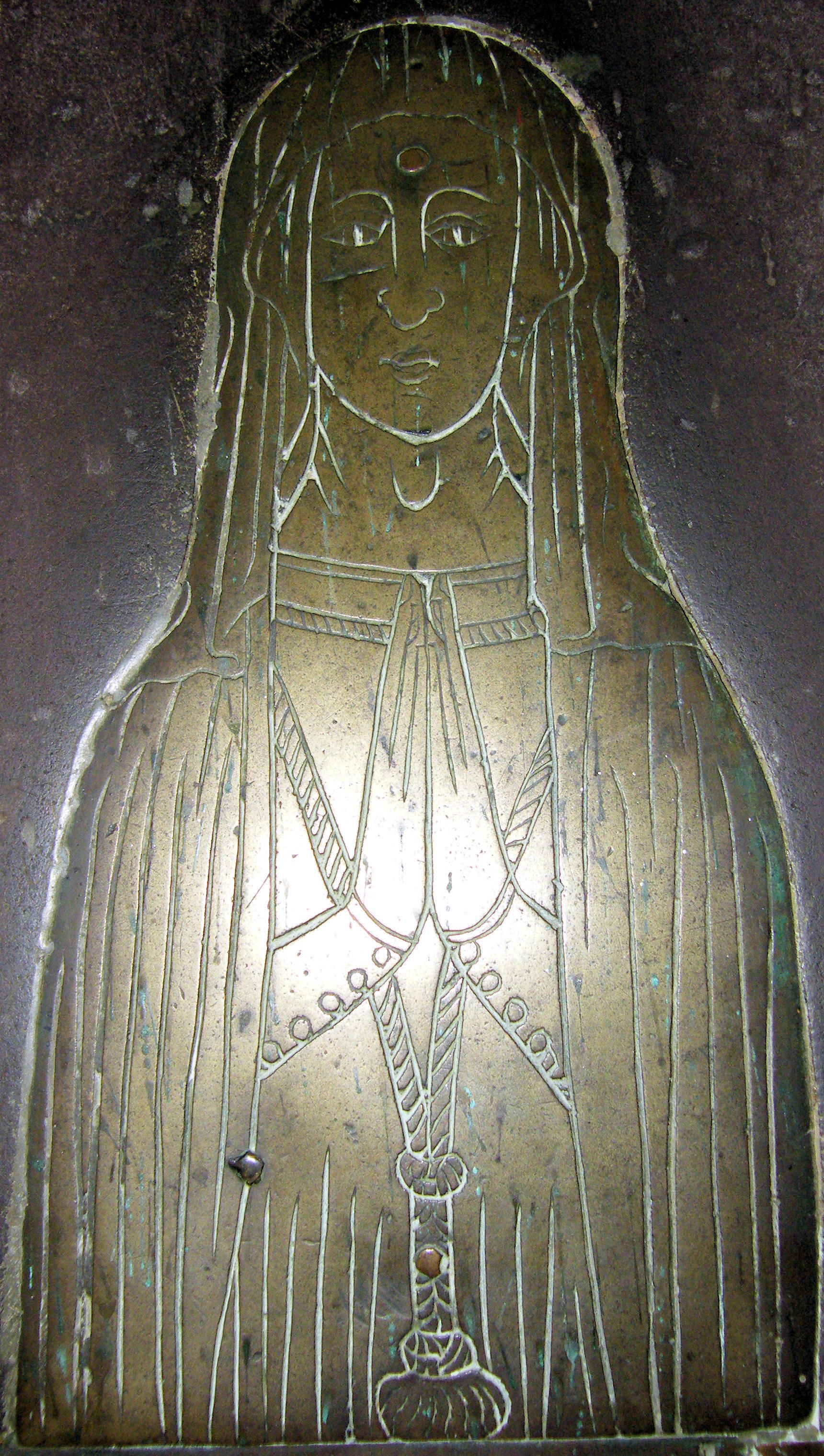 |
Cloak clasp and cord detail, Margaret Audley, Barnstaple and North Devon Museum, 1373
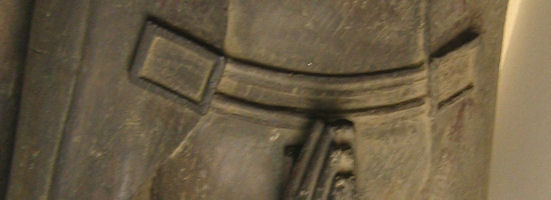
Women wore hose or stockings, although women's hose generally only reached to the knee, and held by garters. It is debated but women probably only wore the chemise, and no braes or equivalent.
The rich wore gold and silver buckles, brooches and firdles set with precious stones, or for the poor Copper brass and wrought iron were used.
Belts
Richly ornamented girdles and belts were worn
Pouches
Pouches were made from a variety of materials including leather. Tassels hanging off the bottom were popular.
Aprons were worn by various trades and craftswomen.
Scarlet, greens and blue, red, white, purple, black, russets were worn. The kings supporters wore red and white and the Lancastrian supporters wore blue and white. During the reign of Richard II ladies riding side saddle is said to have been introduced by the Queen Anne of Bohemia, before this time ladies rode astride the horse.
Hair was worn parted at the centre with two plaited coils, and a narrow band was worn around the head or a coronet for court wear, with an embroided or jewelled caul (coarse hair net made out of silk, gold or silver worn by the royalty or nobility). A hairnet from the 1400's can be seen in the Museum of Lonndon. The long shaped headdress of Edward III's period was replaced by round headdress worn higher on the head, sometimes with thicker gold braiding and a jewelled banding. Often worn with the houppelande was the chaplet, a wide ornamented, padded roll, made of silk or satin.
A short veil was worn with most of the headress, usually only at the back, sometimes with more than one veil. The wimple covering the throat was still worn by middle to low class women but not by the upper classes. Long hair was bound with fillets or wreaths of flowers about the brow, wimples were used but the gorget was seen only on country women.
Chaplet, coronets, crowns and circlets
A type of head ornament in the form of a garland, wreath, or ornamented band, to be worn around the head. Chaplets were made of metal with repoussé decoration or embellished with gemstones and pearls. There were no restrictions regarding crowns, all people of rank wore them.
Coronet, Eleanor Dynham 1394 Kingskerswell

The Dorelet. A caul made of gold net worn with all the hair tucked under it was called a dorelet. The back of the neck was shaved and the eyebrows plucked out.
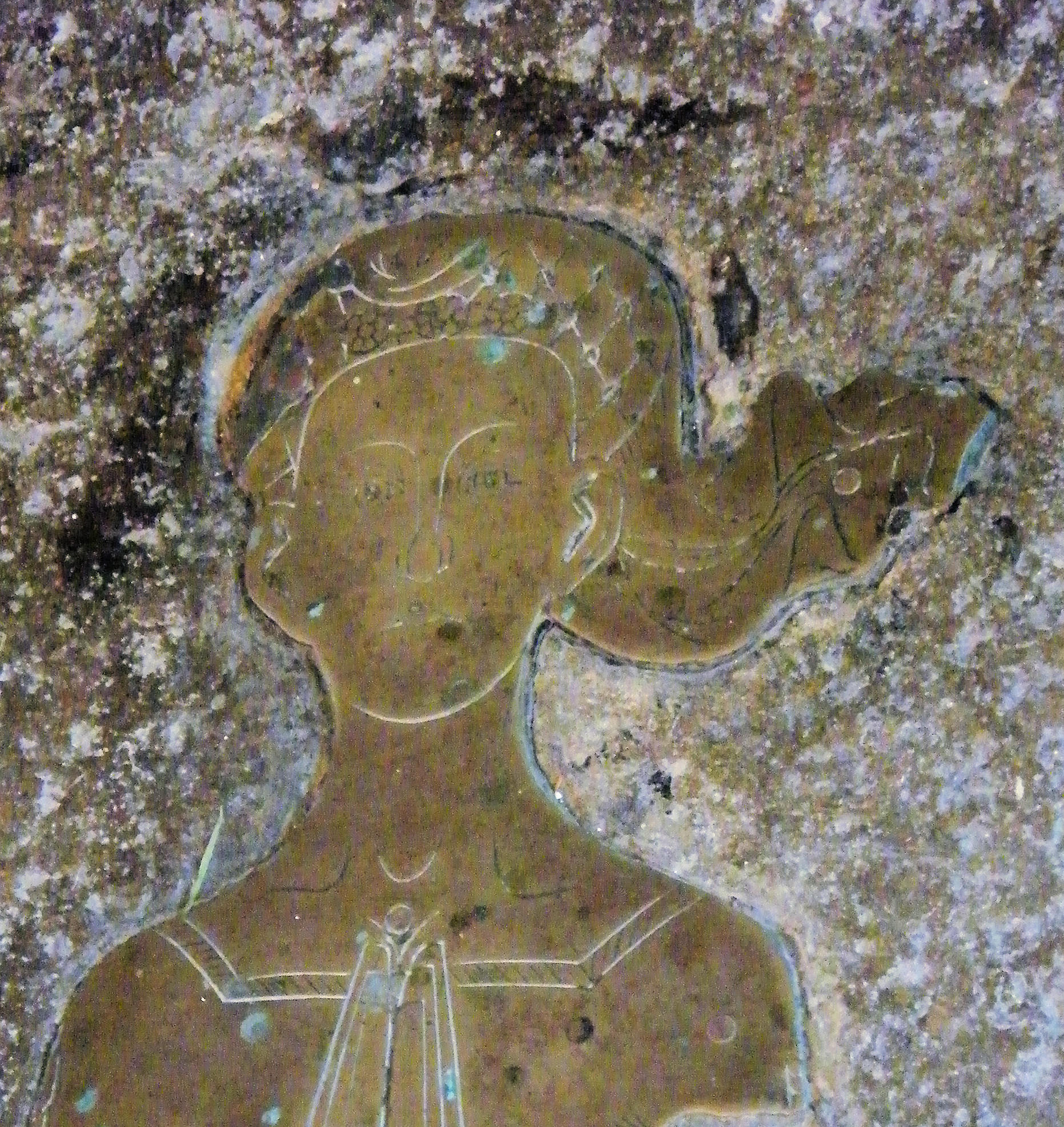
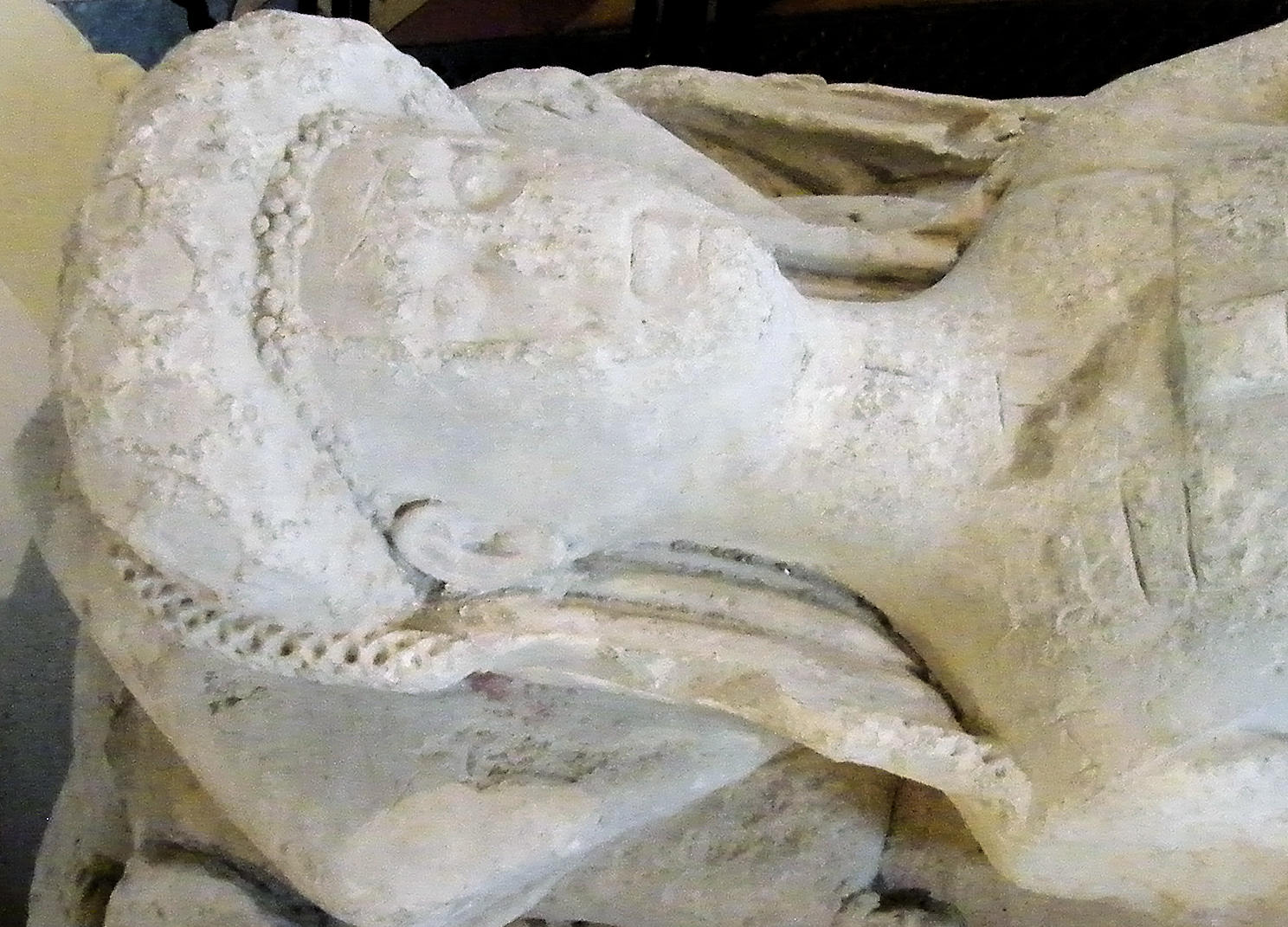
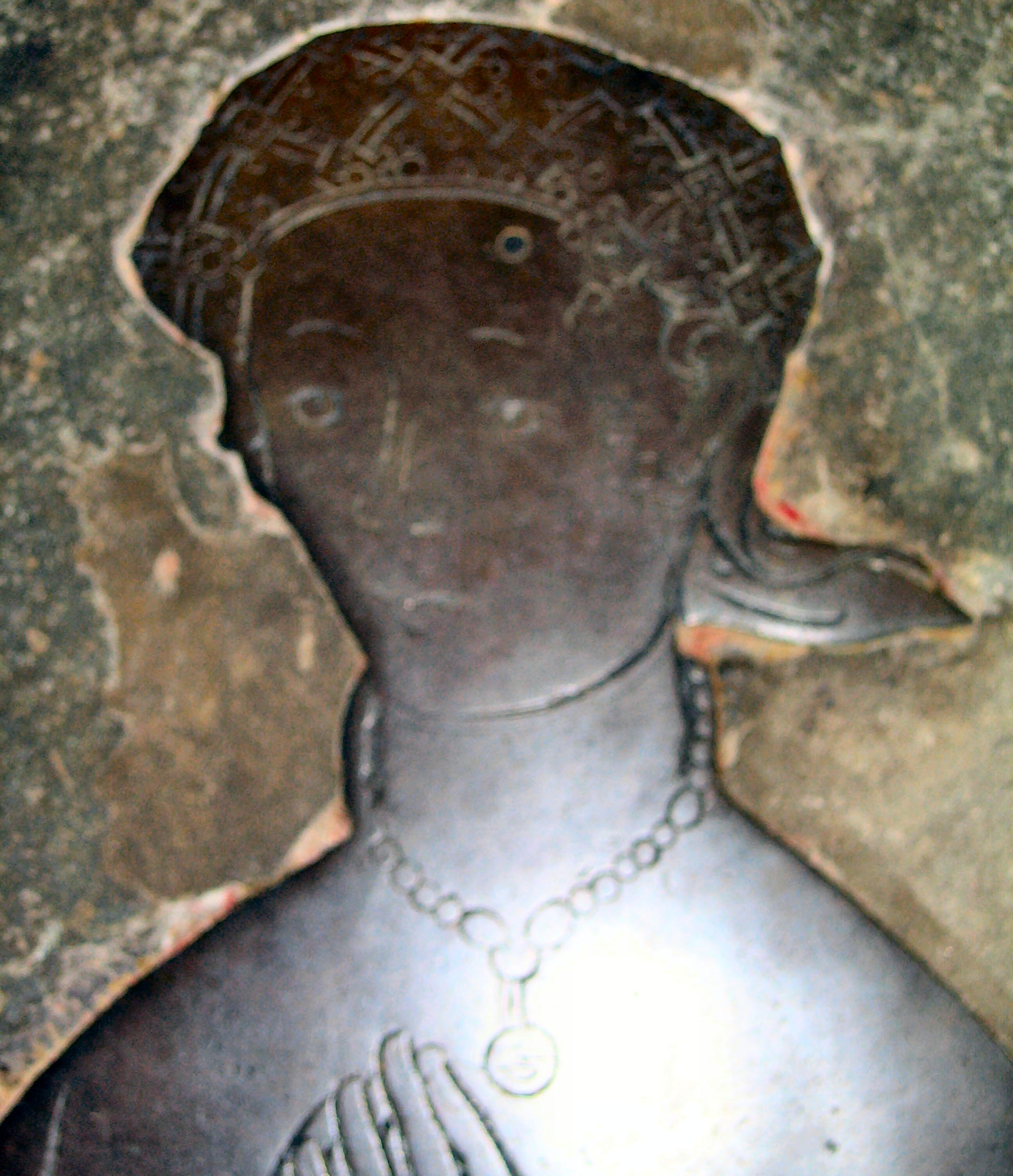
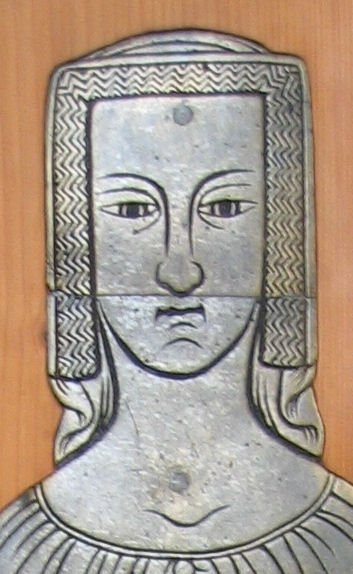
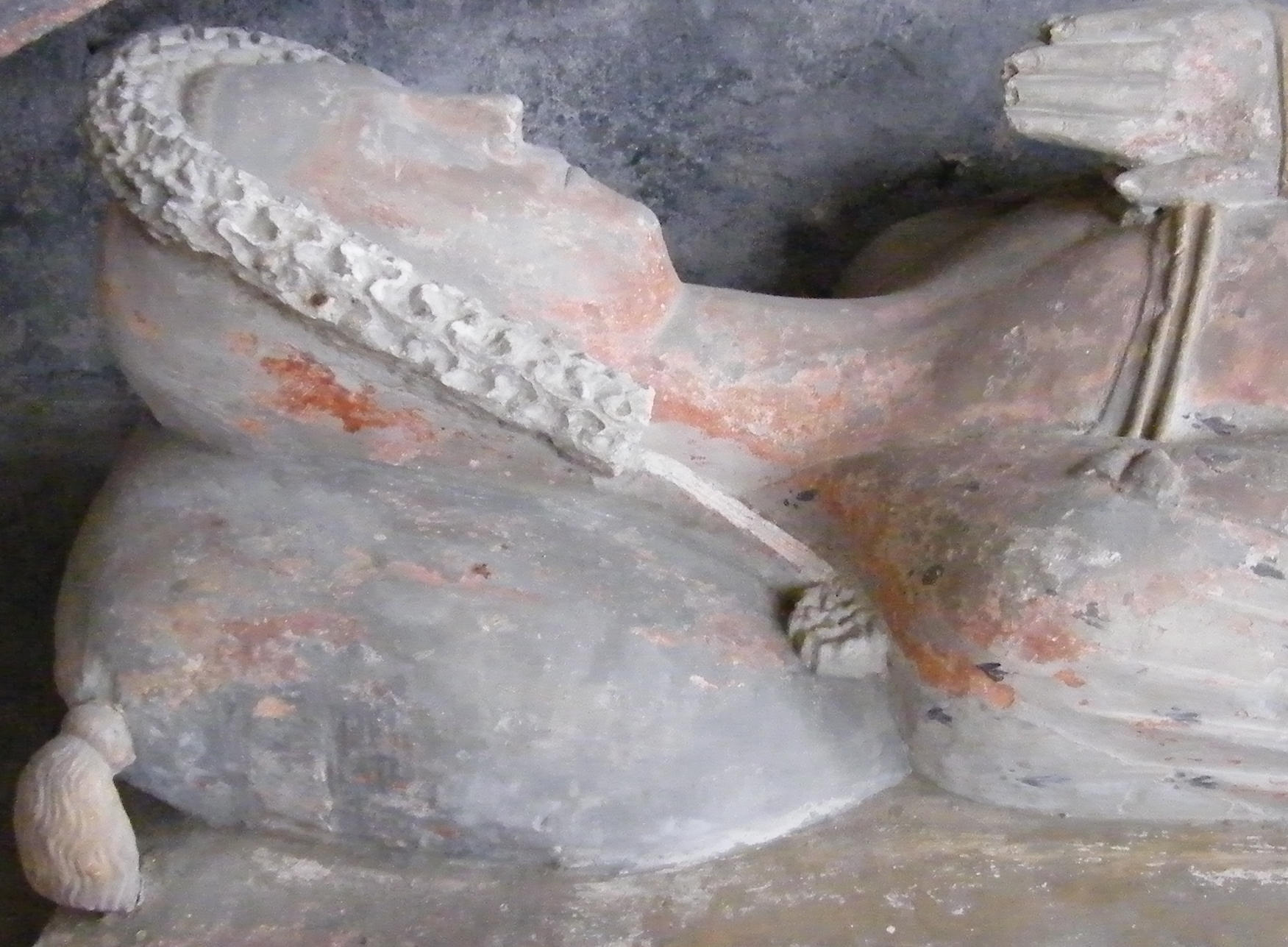
The reticulated headdress evolved from the crepinette retained the golden fretwork caul confining the hair on either side of the face, but no longer had the fillet over the cauls. It had a large padded roll instead. Over time as the top of the padded roll extended upwards, the middle of the roll descended into a V at the centre of the forehead forming the heart shaped hennin. The heart shaped hennin was worn alongside the hennin and the horned headdress of the lower classes.
| Reticulated head dress, Elyenore, Stoke Fleming, 1391 | Reticulated Headdress Little Munden, Nanrina Thornbury, 1396 | Reticulated head dress, Lora de St Quintin, Brandsburton, 1397 |
 |
 |
 |
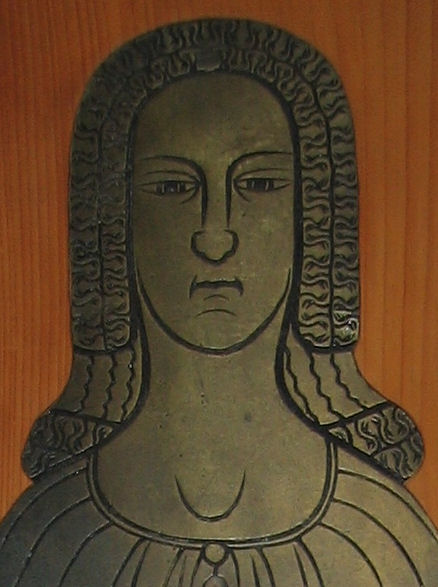
These continued to be popular during the riegn of Richard II.
| Nebule head dress, a wife of Reginald Malyns, Chinnor, 1385 | Nebule head dress, a wife of Reginald Malyns, Chinnor, 1385 | Ruffled veil or nebulé-headdress, Maud de Grey, Stanton Harcourt, 1394 |
 |
 |
 |
These continued to be worn during the reign of Richard II
| Cylinder Cauls or Templars, Lady Ellis, Sandwich, 1392 | |
 |
A shift or chemise was worn as an undergarment made of linen or silk for the wealthy. Linen was made from the flax plant and was relatively easy to bleach and clean of sweat and body oils providing a layer protecting the skin from what may often have been a coarse wool, as well as helping to stop the sweat and body oils from entering into the layer above.
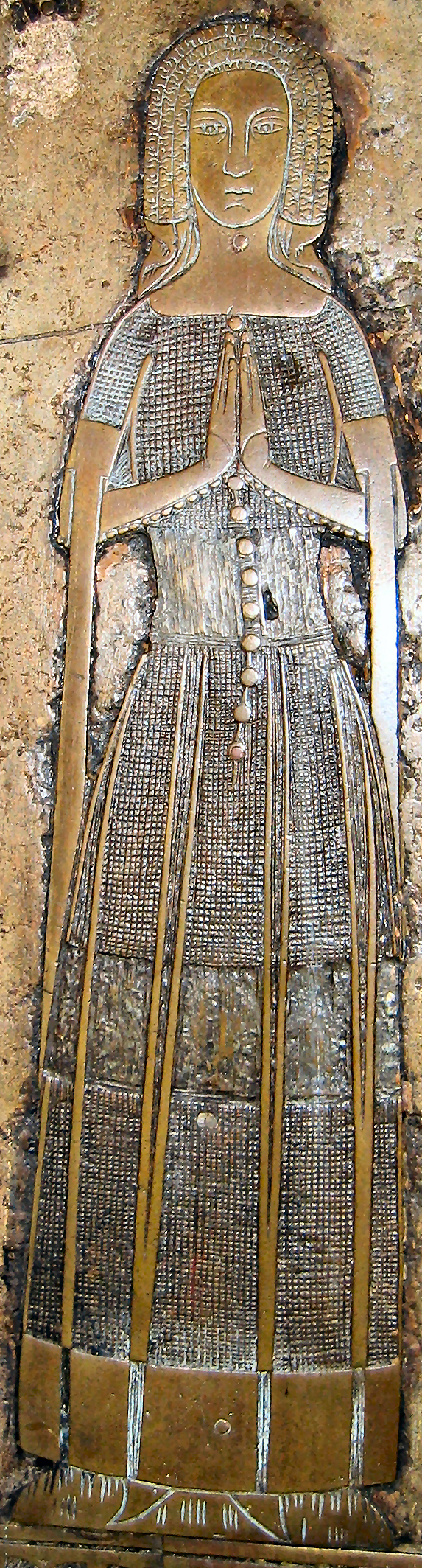
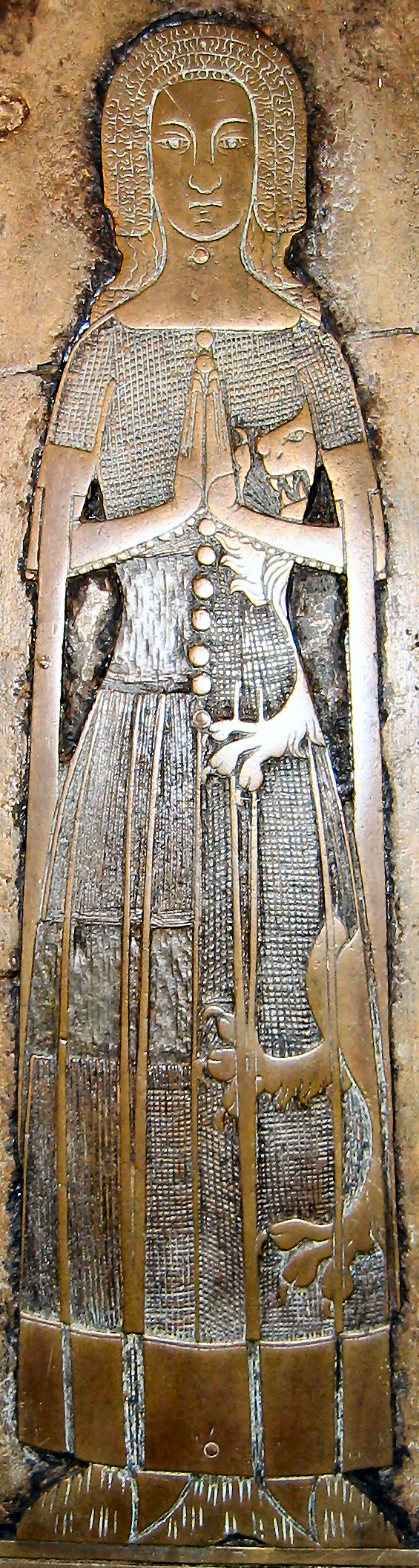
The kirtle and the cote-hardie continued to be worn in this period. The smock was of linen or silk for the wealthy.
| Cotehardie with tippets, Joan Foxley, Bray, 1378 | Cotehardie with tippets and heraldry, Maud Foxley, Bray, 1378 |
 |
 |
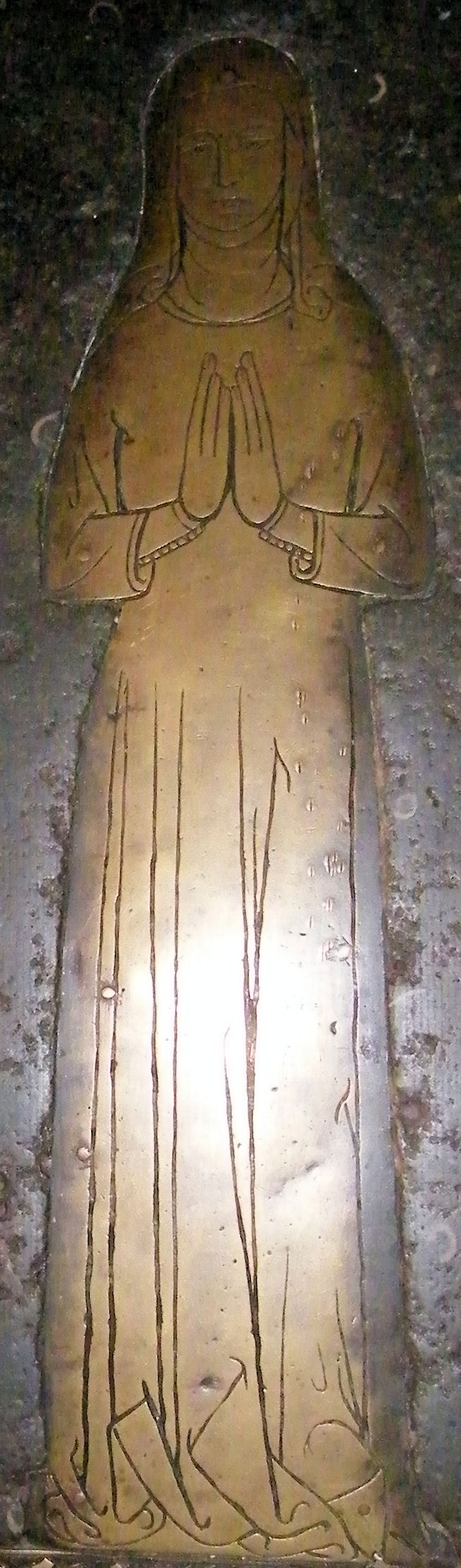
The surcoat during the reign of Richard II, could be shaped with a wide neckline and generally had long sleeves.
| Surcoat showing buttoned sleeves of kirtle beneath, Lady Pecock, St Albans, 1380 | Surcoat with sleves shows kirtle sleeves on wrist, with mantle, Agnes Chichele, Higham Ferrers, 1400 |
 |
 |
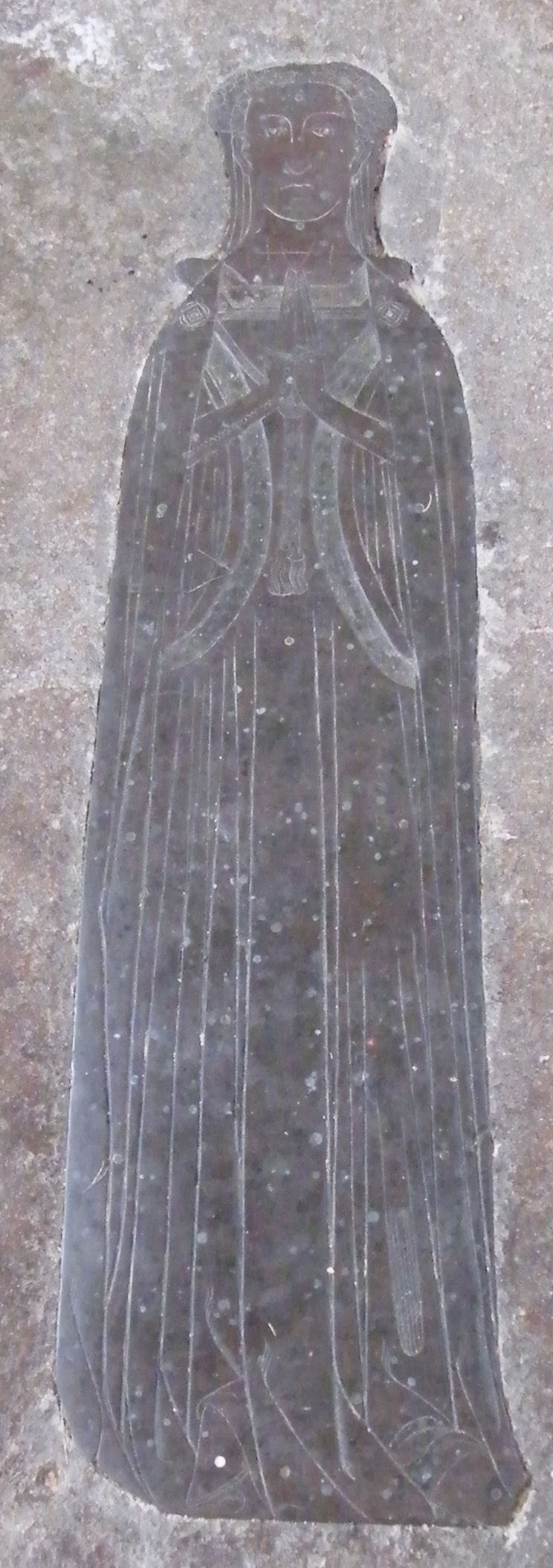
It was cut away at the sides leaving a small panel at the front and back, and allowed the kirtle beneath to be seen, the sideless surcoat was often had the addition of fur from the neck to the hip, and decorated down the front with jewels instead of buttons. Silks, satins Taffeta and scarlet cloth were used by the rich and by others flannel (fine linen), soft wool, linens and russet. The bodice part of the surcot ouvert always was cut independently from the loose skirt, and was seamed into it later. The former had a wide plastron in front, which was decorated with fur around the neckline and the sleeve cut. The sideless surcoat was worn until the end of the 14th Century, but the skirt was often made of differing material and gathered at the front and back.
The bodice part of the surcot ouvert always was cut independently from the loose skirt, and was seamed into it later. The former had a wide plastron in front, which was decorated with fur around the neckline and the sleeve cut. By the end of the century the bodice was made entirely of fur, termed plackard, which was decorated with square mounts, often clasped together as a chain.
Sideless Surcoat and cloak with brooch and fastening, unknown lady, Stoke Nayland, 1400
Gown
Her gown at this time has been called a "courtepy," also a kirtle and (by Chaucer) a "cote."
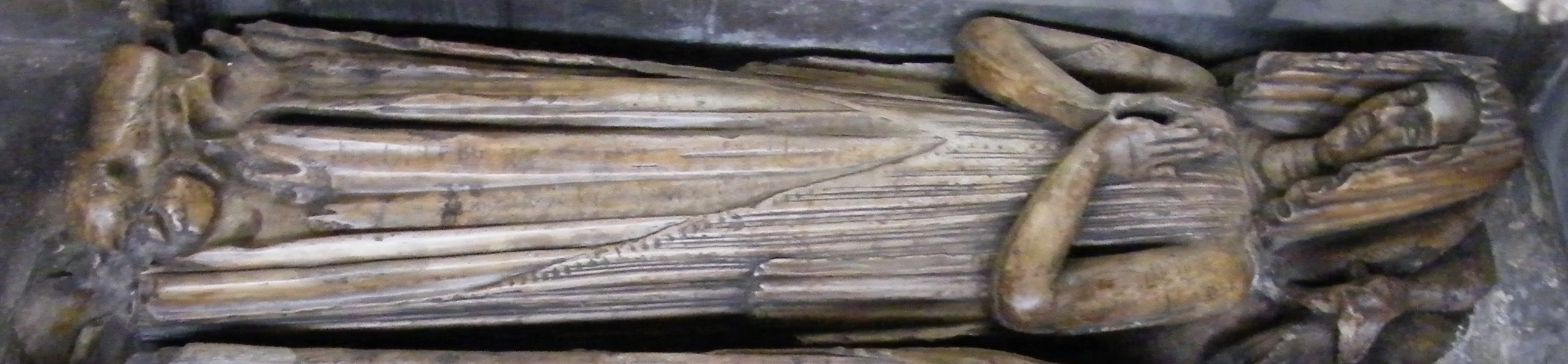
| Gown, Katherine de Norwich, Hull,1381 | Gown, Reginald Malyns and 2 wives, Chinnor, 1385 | Gown, Reginald Malyns and 2 wives, Chinnor, 1385 |
 |
 |
 |
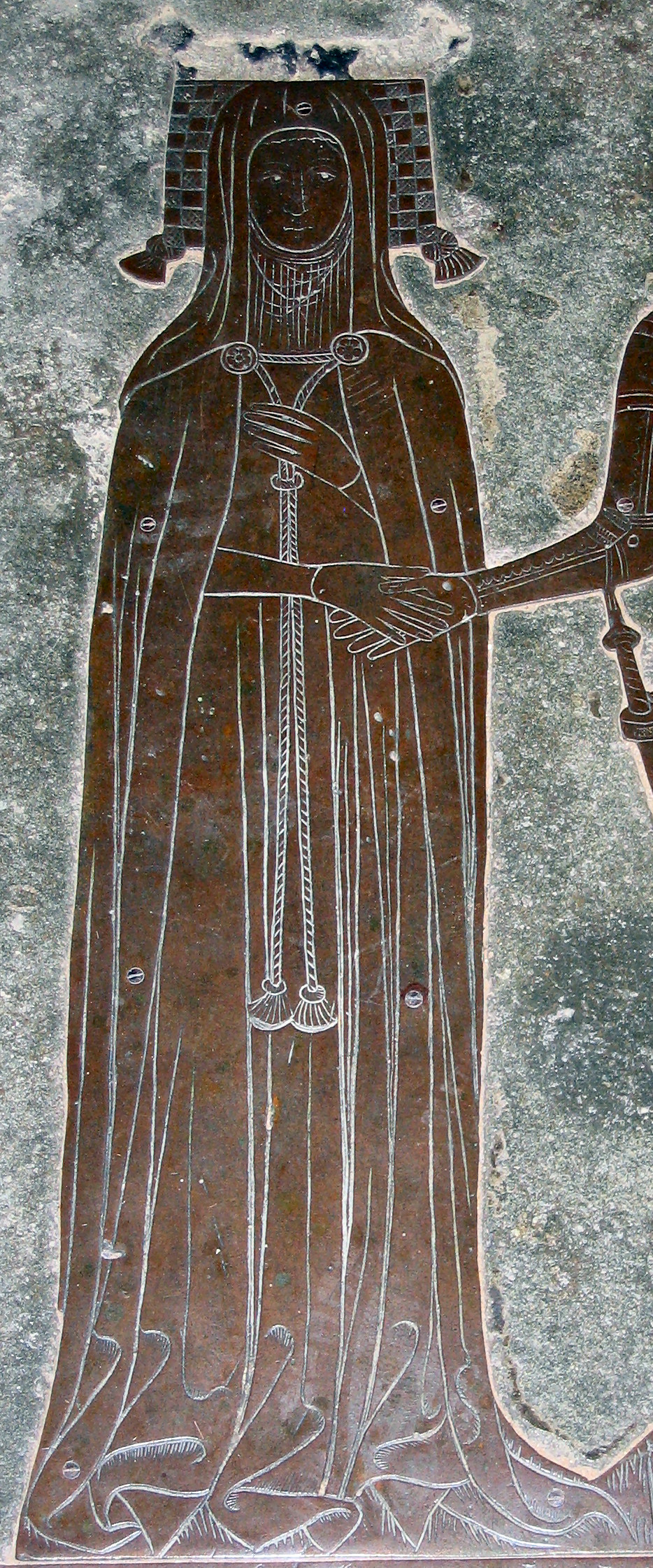
In the 1380's the popular houppelande appeared, this was a gown made in a bell shape with a hole for the neck, and for ladies was floor length and usually cut with a wide aperture at the neck, and a wide usually embroidered and sometimes jewelled belt from giving the waistline rising up to right underneath the bust, sleeves were very wide and hanging, like angel sleeves.
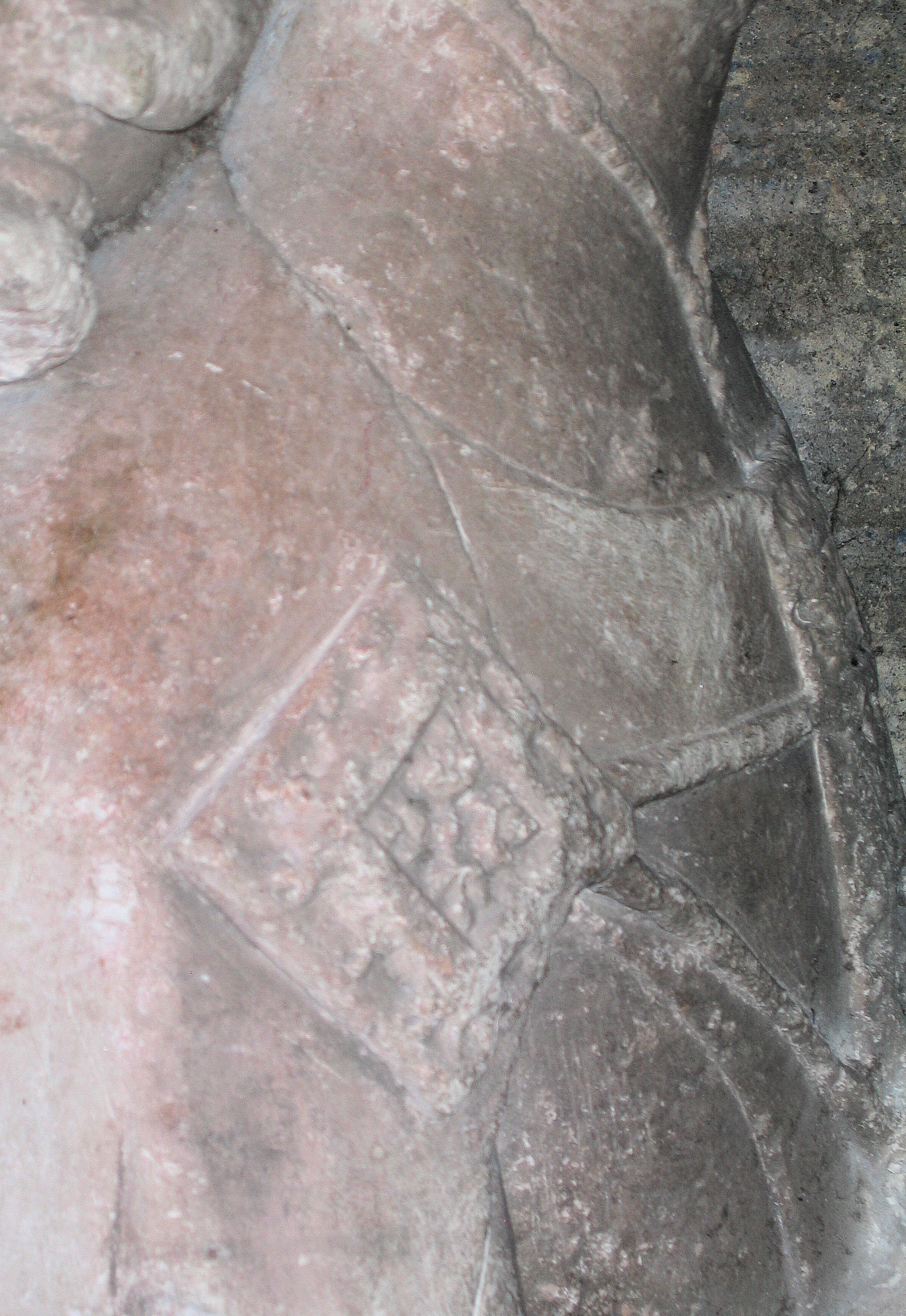
Cloaks were worn and held across the chest by cords secured to the backs of large ornaments.
| Cloak with clasp and cord, Elyne Cerne, Draycott Cerne, 1393 | Cloak clasp and cord, Eleanor Dynham, Kingskerswell, 1394 | Cloak and clasp with cord, Maud de Grey, Stanton Harcourt, 1394 |
 |
 |
 |
Legs:
Women wore hose or stockings, although women's hose generally only reached to the knee, and held by garters. It is debated but women probably only wore the chemise, and no braes or equivalent.
Women wore pointed shoes, but not as extreme as men.
Pouches
Pouches were made from a variety of materials including leather. Tassels hanging off the bottom were popular.
Belts
Aprons were worn by various trades and craftswomen.
New borns were swaddled, often with carrying boards. Throughout the Fourteenth Century frrom when they could walk, children wore miniature simplified versions of their parents clothes, boys upto between four and six years were dressed as girls.
All classes and both sexes are usually shown sleeping naked (special nightwear only became common in the 16th century) yet some married women wore their chemises to bed as a form of modesty and piety. Many in the lower classes wore their undergarments to bed because of the cold weather at nighttime and since their beds usually consisted of a straw mattress and a few sheets.
Crispinette: It has been speculated that this word came from the French word Crépinette, a small flattened sausage, these are wrapped in caul fat which is a fatty membrane, with a net like structure, and may also be the derivation of the term caul.
A short history of costume & armour, Francis M. Kelly, Randolph Schwabe, 1931
The Chronicle of Western Costume: From the Ancient World to the Late Twentieth Century, John Peacock, 1991
Costume 1066 to the present John Peacock, 1984
English Costume of the Later Middle Ages, Iris Brooke, 1935
English Costume, painted and described by Dion Clayton Calthrop, 1931
Fashion in the Age of the Black Prince: A Study of the Years 1340-1365, Stella Mary Newton, 1980History of British costume, by James Robinson Planché, 1834
Medieval Costume and how to create it, Dorothy Hartley, 1931
Medieval Costume and Weapons, Eduard Wagner, Zoroslava Drobna, Jan Durdik, 1958
Medieval Costume in England and France, Mary G. Houston, 1939
Medieval Dress and Fashion, Margaret Scott, 2007
The Medieval Taylors Assistant, Sarah Thursfield, 2001
Shoes and Pattens, Francis Grew and Margrethe de Neergaard, 1988
|
The Medieval Combat Society Medieval Reenactments |